 Skip to content

Jumper’s knee draws in quad strength, ankle mobility and hip control, and several regulated professions in this building can assess those links within a single appointment. Nothing is added without reason. Priorities are agreed with you.
Laser Therapy in Highland Creek for Jumper’s Knee
Class IV laser therapy is offered to Highland Creek athletes whose patellar tendon hurts on every landing. Basketball and volleyball players make up much of this group. Student schedules are accommodated. Season timing shapes the plan.
Direct billing accepted with most major insurance providers




Google Reviews
5.0
"I've been seeing Dr. Karavanas for 4 years. He is the best Chiropractor in Markham."
Alex Z."I can't recommend Dr. Fiona Chan enough. She spends the entire appointment with you and always diagnoses the real cause of the issue."
Alain K."Dr. Fiona Chan is knowledgeable and patient with my kids, and has been a great support for their health and gymnastics performance."
William Y.
0 +
Years of Combined Experience
Who We Are
UTSC Campus, Old Kingston Road and the Route North
Students head north on Markham Road from the campus and Old Kingston Road area, then east along Highway 7 to the clinic sited at McCowan Road.
Patellar tendon pain builds through a season of repeated landings, and the tissue below the kneecap responds to accumulated jump volume rather than to any single bad landing. Warm therapeutic light can help ease that pain between sessions, while heavy slow loading rebuilds the tendon capacity that a competitive schedule keeps drawing down. Weekly jump volume is written down. Court surface changes get noted. Quad strength is compared both sides. Training rarely stops altogether.
- Multidisciplinary Team
Chiropractors, physiotherapists, and registered massage therapists collaborating under one roof, so your care is coordinated, not fragmented.
- Movement Based Approach
We assess how your body actually moves, then build a treatment plan that restores function from the foundation up. Kinetic. Core. Foundation.
“A tendon that hurts on landing needs loading, not layoff.”
Sitting out for three weeks lowers what the tendon can handle and leaves the same schedule waiting at the end of it. Loading through a controlled range is what builds tolerance, and treatment exists to make that loading possible rather than to replace it. Volume returns in planned steps.
What We Offer
Laser Therapy and Court Sport Care for Highland Creek Athletes
Chiropractic Care

Restricted hips and ankles change landing mechanics considerably, and chiropractic care can address what testing finds there. Both sides are examined. Findings are explained plainly.
Physiotherapy

Heavy slow loading rebuilds a patellar tendon, and physiotherapy supplies the progression along with the return-to-play criteria. Quad strength is measured each visit. Jump testing comes later.
Registered Massage Therapy

Quad and calf tightness adds to the load reaching the tendon, and massage therapy can ease that between fixtures. Timing suits recovery days. Pressure avoids the tender point. Comfort is checked.
Acupuncture

Tendon pain persisting through a full season sometimes eases when acupuncture joins the loading plan. Points follow the assessment. Reasoning is explained. Consent is taken each visit.
Class IV K-Laser Therapy
Applied below the kneecap, Class IV laser therapy can help ease patellar tendon pain between training sessions. Sessions take a few minutes. Nothing invasive is used. Training the same day is fine.
Custom Orthotics

Foot mechanics influence landing forces at the knee, and custom orthotics assessed and cast on site can form part of the plan. Court shoes are reviewed first. Casting takes one visit.
Exercise Rehabilitation

Rebuilding jump capacity safely is measurable work, and exercise rehabilitation with a Registered Kinesiologist tracks the progression. Both legs are compared. Volume rises on evidence.
Pelvic Floor Therapy

Athletes noticing symptoms during impact work can arrange pelvic floor therapy with a pelvic-health therapist. A private treatment room is used. Assessment stays discreet. Consent guides each step.
Pediatric & Pregnancy Chiropractic

Families attending with a younger sibling can add pediatric and pregnancy chiropractic, gentle low-force care for comfort. Pregnancy back ache is a common reason. Children are treated gently.
How It Works
Your Path from Pain to Lasting Movement
Every patient at KC Rehab follows the same proven four-step process, designed to uncover the root cause of your pain or restriction and build a recovery plan that actually lasts.
Step 1
Consultation and Assessment
Your first visit begins with a detailed conversation about your history, lifestyle, and goals. We then perform a hands on movement assessment to identify the underlying mechanics behind your symptoms.
Step 2
Personalized Treatment Plan
Based on your assessment findings, we build a treatment plan tailored to your specific needs, goals, and timeline. This may combine chiropractic, physiotherapy, RMT, acupuncture, and exercise rehabilitation.
Step 3
Active Treatment & Therapy
Your plan comes to life through manual therapy, targeted exercise, and the modalities best suited to your condition. Every session is monitored and adjusted based on your progress.
Step 4
Ongoing Care & Prevention
Once you have recovered, we equip you with the exercises, ergonomic advice, and maintenance schedule you need to stay pain-free and continue moving well for years to come.
Why CHoose Us
Why Highland Creek Students Treat Knee Pain Here
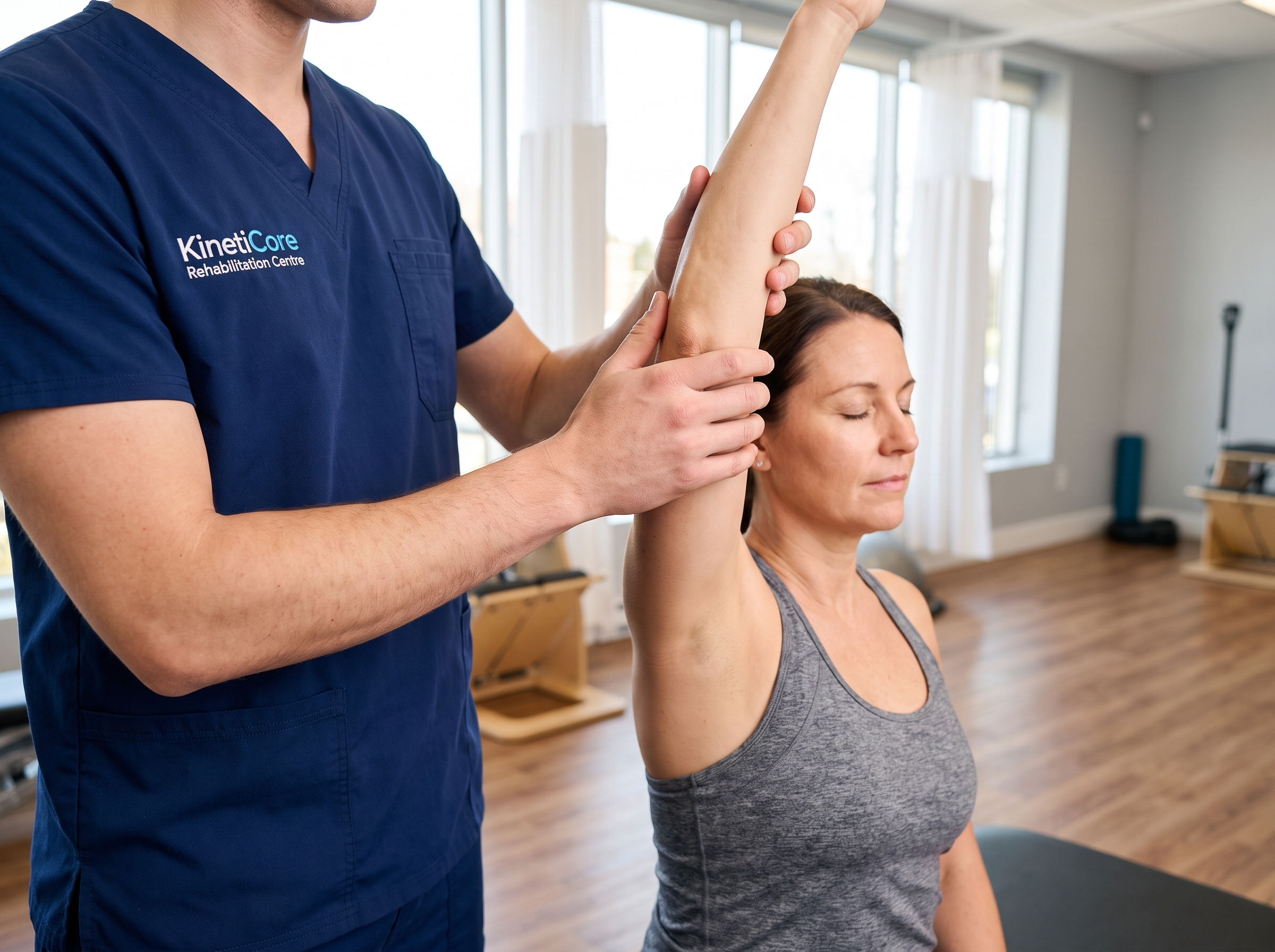
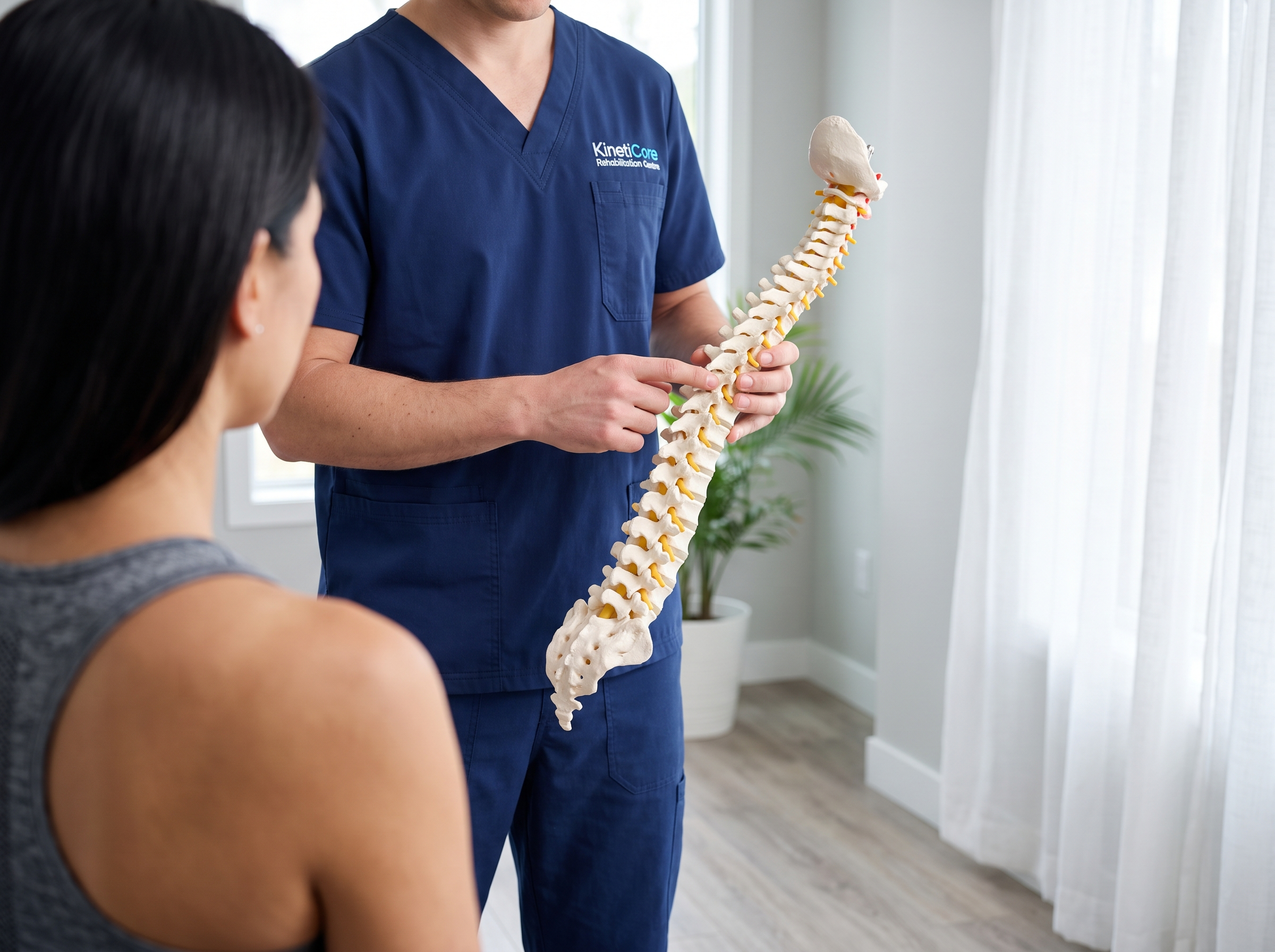
Jumper’s knee is assessed against the season producing it, so practice count, court surface and fixture load all shape what happens next. Quad strength is measured both legs. Student timetables are accommodated. Free parking sits outside. Sessions are short.
Jump load counted, not guessed
Practices, games and gym sessions are added together, because total landing volume is what the tendon responds to across a week. Counts are reviewed.
Student schedules accommodated
Appointments can be arranged around lectures and evening practices, and follow-up sessions are brief enough to fit between the two.
Quad strength measured both sides
Strength is recorded on each leg rather than judged by feel, since the injured side often sits well below its pair without feeling weak.
Season timing respected
A plan built three weeks before playoffs differs from one written in the off-season, and the sequence is set with your calendar in view.
RESTORE. REBUILD. RECOVER.
Whether it has been a week or a decade, you do not have to keep adjusting your life around pain. Book your initial assessment at KC Rehab today and find out what real, movement based recovery actually feels like.
Our Customer Testimonials
Frequent Asked Questions
Why does the knee hurt on landing but not walking?
Landing loads the patellar tendon at several times body weight, whereas walking barely challenges it at all.Pain appears only once the load crosses the tendon’s current tolerance. Patients from West Hill describe the same threshold behaviour. That threshold rises with loading work.
Can laser be used on the patellar tendon?
The tendon sits just below the kneecap and close to the surface, which makes it straightforward to treat.Sessions are short and leave no soreness. KinetiCore Rehabilitation Centre screens for the situations where treatment would not be appropriate before starting a course. Comfort is checked as it runs.
Should jumping stop during a season?
Complete withdrawal is rarely necessary and often counterproductive, since the tendon loses capacity while resting.Jump volume is reduced and rebuilt instead. Patients from Rouge usually keep training in a modified role throughout the season. Pain rules guide each session. Volume returns in planned steps.
Does a patellar strap help?
A strap can reduce symptoms during play for some athletes, though it manages load rather than changing the tendon.Worn constantly it becomes a crutch. To ask whether one suits your presentation, contact us ahead of the appointment. Wear time is planned deliberately. Strength work continues regardless.
Why is the pain worse the morning after a game?
Tendon pain typically peaks twenty-four hours after loading rather than during it, which makes the previous day the relevant question.That delay is used as a progress marker. Patients from Morningside track the same pattern. Morning severity is recorded weekly. It eases before pain disappears.
What loading rebuilds a jumping tendon?
Are student rates or coverage available?
Many student health plans cover treatment delivered by a regulated practitioner, and coverage is checked before any course begins.Direct billing is used wherever the insurer permits it. Costs are confirmed at assessment so nothing about the fees arrives as a surprise later. Plan limits are explained clearly.
How is readiness for full training judged?
Clearance rests on strength within a reasonable margin of the other leg, pain-free jump testing and tolerance of a full practice.Time since onset counts for very little on its own. Each criterion is tested rather than assumed from how the knee feels. Testing is repeated before clearance.