 Skip to content

Back-related leg pain involves the spine, the hip and the nerve pathway between them, and several regulated professions here can address the parts that testing shows matter. Assessment maps what is involved. Options are explained before starting.
Laser Therapy in West Hill for Back-Related Leg Pain
We provide Class IV laser therapy for West Hill patients whose leg pain and tingling begin in the low back. Nerve signs are checked properly at assessment. Symptoms are mapped where they travel. Free parking sits outside.
Direct billing accepted with most major insurance providers




Google Reviews
5.0
"I've been seeing Dr. Karavanas for 4 years. He is the best Chiropractor in Markham."
Alex Z."I can't recommend Dr. Fiona Chan enough. She spends the entire appointment with you and always diagnoses the real cause of the issue."
Alain K."Dr. Fiona Chan is knowledgeable and patient with my kids, and has been a great support for their health and gymnastics performance."
William Y.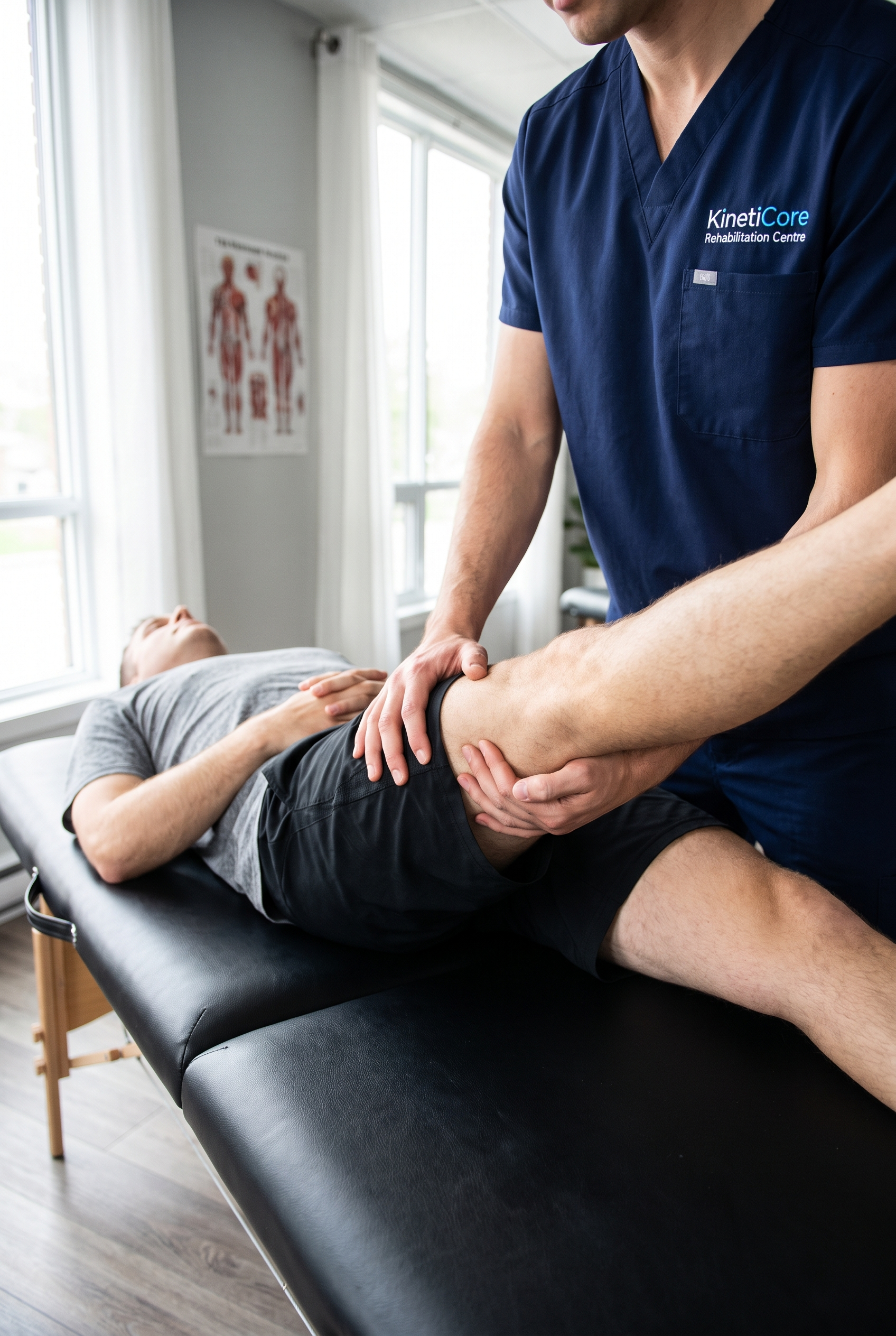
0 +
Years of Combined Experience

Who We Are
Colonel Danforth Park, Kingston Road at Lawrence and the Route North
West Hill patients travel north on Markham Road from the Kingston Road and Colonel Danforth Park area, then east on Highway 7 to the clinic.
Pain travelling down the leg feels like a leg problem and almost never is one, which is why the assessment starts at the spine and follows the symptoms outward. Therapeutic light can help ease the local tissue irritation that accompanies these presentations, while movement work and positional strategies address what the nerve is responding to. Reflexes, strength and sensation are tested. Symptom maps are drawn at each visit. Positions that ease the leg get identified.
- Multidisciplinary Team
Chiropractors, physiotherapists, and registered massage therapists collaborating under one roof, so your care is coordinated, not fragmented.
- Movement Based Approach
We assess how your body actually moves, then build a treatment plan that restores function from the foundation up. Kinetic. Core. Foundation.
“Where the pain is felt and where it comes from differ.”
Rubbing the calf will not help a calf whose pain originates at a nerve root in the low back. Tracing symptoms back to their source is the whole point of the first appointment, because treating the wrong end of the problem costs weeks. The plan follows from that finding.
What We Offer
Laser Therapy and Nerve-Related Care for West Hill Patients
Chiropractic Care

Restricted lumbar segments contribute to nerve irritation in some presentations, and chiropractic care is available where assessment supports it. Risks are explained before consent.
Physiotherapy

Directional movement work carries most back-related leg pain, and physiotherapy provides that programme. Symptom location is tracked each visit. Positions are practised here. Graded loading follows.
Registered Massage Therapy

Protective spasm through the low back and buttock adds to the discomfort, and massage therapy can ease that layer. Pressure is matched to irritability. Timing follows the acute phase.
Acupuncture

Persistent leg pain disturbing sleep sometimes eases when acupuncture is added to the movement plan. Points follow the assessment. Reasoning is explained. Consent is taken each visit.
Class IV K-Laser Therapy
Applied over the low back, therapeutic light can help ease local tissue irritation during a flare. Sessions run only a few minutes. Nothing invasive is involved. Movement work does the rest.
Custom Orthotics

Altered walking patterns during a flare load the other side heavily, and custom orthotics cast on site can even that out. Gait is reviewed beforehand. Casting takes one appointment.
Exercise Rehabilitation

Rebuilding trunk and leg strength after a long flare is measurable, and exercise rehabilitation with a Registered Kinesiologist tracks it. Both legs are compared. Load rises on recorded evidence.
Pelvic Floor Therapy
Low back problems sometimes involve pelvic symptoms, and pelvic floor therapy is delivered by a pelvic-health physiotherapist. A private treatment room is used. Assessment stays discreet.
Pediatric & Pregnancy Chiropractic
Pregnant patients with back-related leg pain often ask about pediatric and pregnancy chiropractic, gentle low-force care for comfort. Children are seen just as gently. Everything stays measured.
How It Works
Your Path from Pain to Lasting Movement
Every patient at KC Rehab follows the same proven four-step process, designed to uncover the root cause of your pain or restriction and build a recovery plan that actually lasts.
Step 1
Consultation and Assessment
Your first visit begins with a detailed conversation about your history, lifestyle, and goals. We then perform a hands on movement assessment to identify the underlying mechanics behind your symptoms.
Step 2
Personalized Treatment Plan
Based on your assessment findings, we build a treatment plan tailored to your specific needs, goals, and timeline. This may combine chiropractic, physiotherapy, RMT, acupuncture, and exercise rehabilitation.
Step 3
Active Treatment & Therapy
Your plan comes to life through manual therapy, targeted exercise, and the modalities best suited to your condition. Every session is monitored and adjusted based on your progress.
Step 4
Ongoing Care & Prevention
Once you have recovered, we equip you with the exercises, ergonomic advice, and maintenance schedule you need to stay pain-free and continue moving well for years to come.
Why CHoose Us
Why West Hill Patients Bring Leg Pain Here
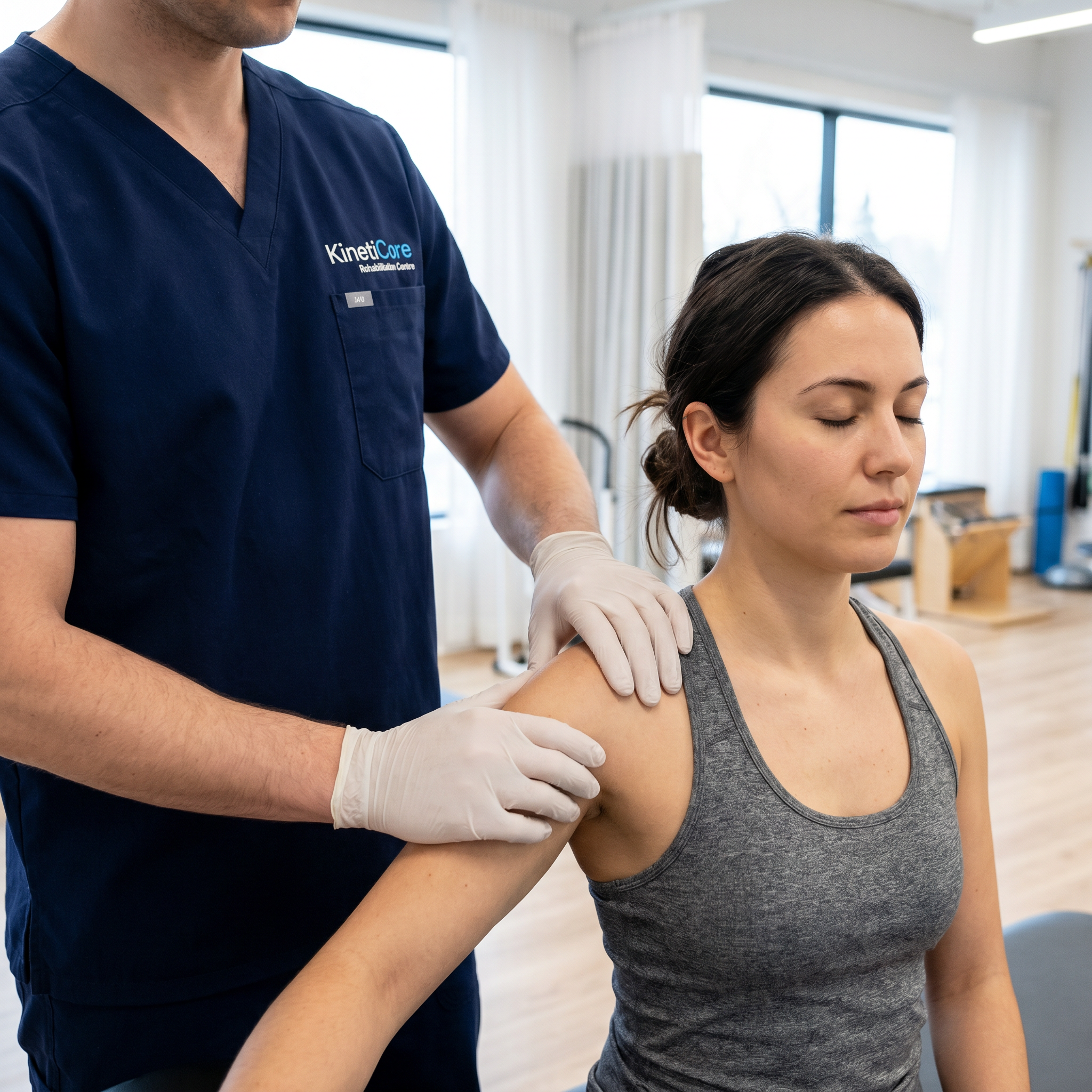
Leg symptoms are traced to their source before treatment starts, and Class IV laser therapy sits within that plan rather than ahead of the assessment. Nerve signs are tested properly. Symptom maps are recorded. Referral happens when warranted. Parking is free.
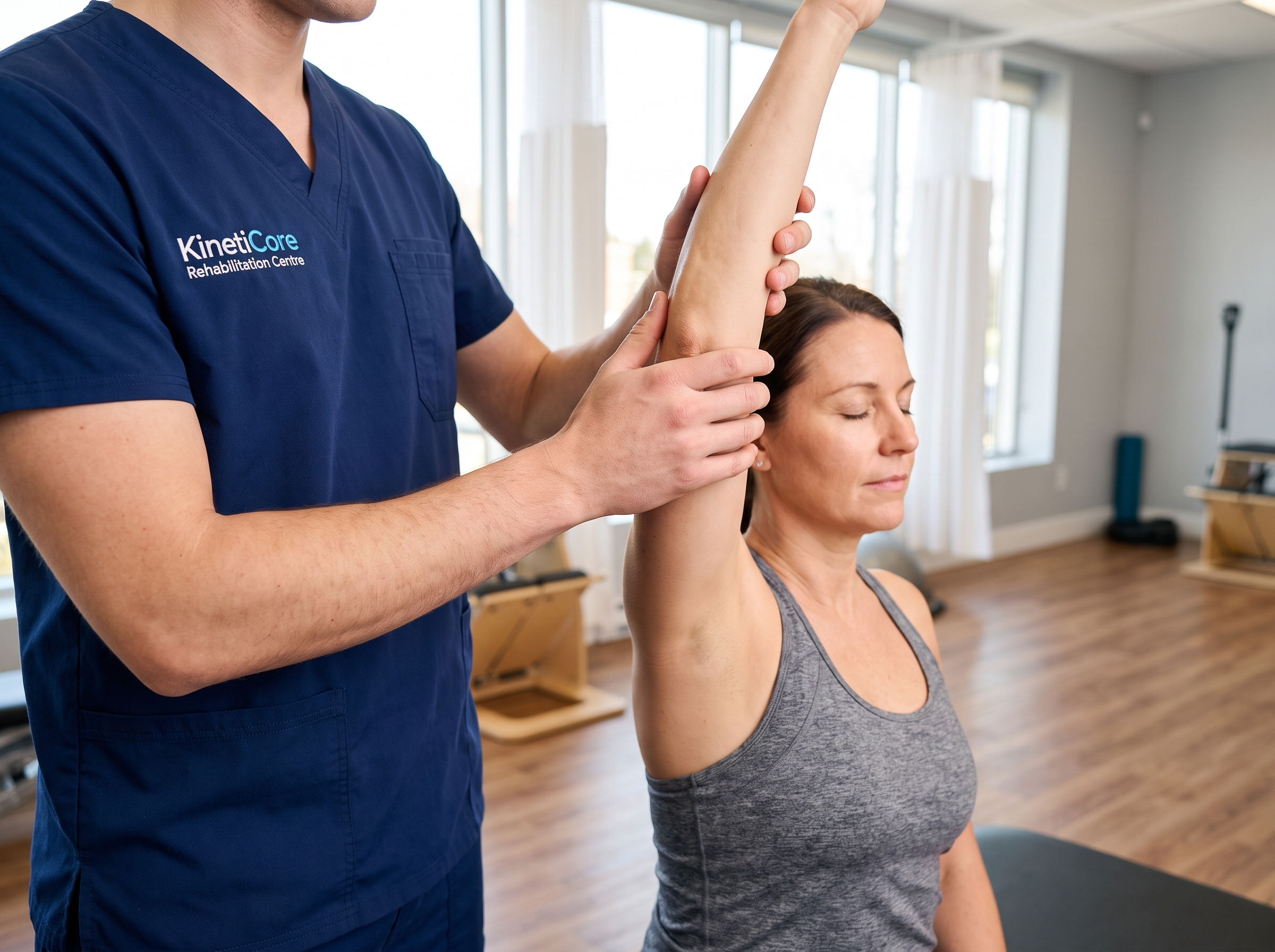
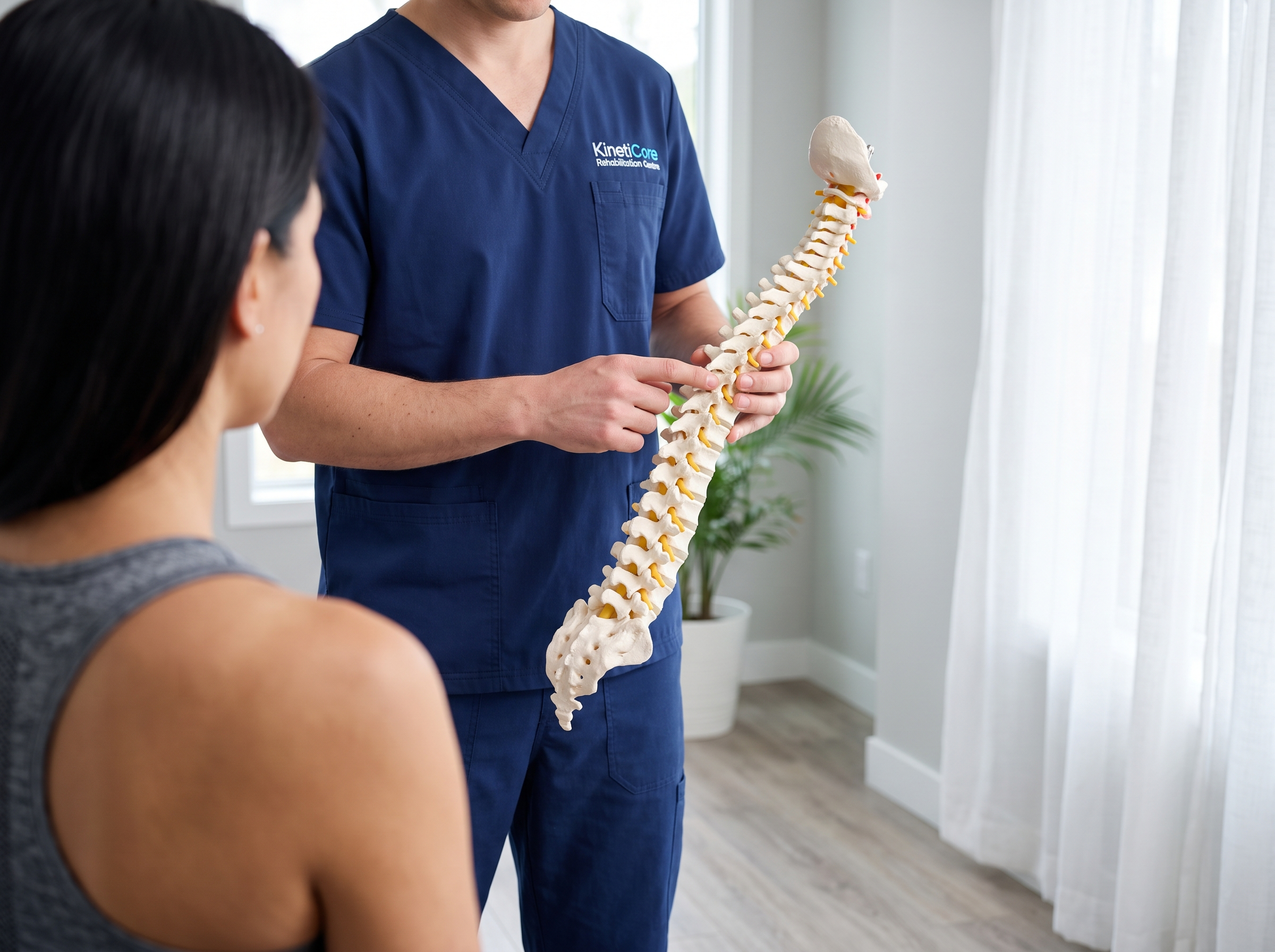
Nerve signs checked at assessment
Strength, reflexes and sensation are tested rather than skipped, because those findings decide whether treatment or referral is the right next step.
Symptoms mapped where they travel
How far down the leg the pain reaches is recorded at each visit, since symptoms retreating toward the back is the clearest early sign of progress.
Red flags screened for properly
Bladder changes, saddle numbness and progressive weakness are asked about specifically, because those findings need medical attention rather than treatment.
Referral arranged when warranted
Where findings point beyond conservative care, onward referral is organised with your records rather than treatment continuing indefinitely.
RESTORE. REBUILD. RECOVER.
Whether it has been a week or a decade, you do not have to keep adjusting your life around pain. Book your initial assessment at KC Rehab today and find out what real, movement based recovery actually feels like.
Our Customer Testimonials
Frequent Asked Questions
Why does back trouble produce calf pain?
Nerve roots leaving the low back supply the leg, so irritation at the spine is felt along whichever pathway that root serves.The calf may be entirely healthy. Patients from Highland Creek often arrive having treated the calf for weeks. Symptom pattern identifies the root. Testing confirms it at assessment.
What does centralising pain mean?
Centralisation describes leg symptoms retreating toward the low back, and it is generally a favourable sign.Pain may feel stronger in the back while the leg quietens. KinetiCore Rehabilitation Centre tracks the furthest point symptoms reach at every visit. That map guides the exercise choice.
Can laser treat nerve-related leg pain?
Laser can help ease the local tissue irritation that accompanies these presentations, though it does not decompress a nerve root.Movement work does the substantive part. Patients from Bendale are given the same honest framing at assessment. Expectations are set before starting.
Is bed rest ever the right answer?
Extended bed rest slows recovery in almost every case and is no longer recommended for back-related leg pain.Short periods of relief in a comfortable position are reasonable. To ask what movement is appropriate during a flare, contact us for guidance. Positions of ease are identified early.
When does an MRI change anything?
Imaging becomes useful when weakness is progressing, when surgery is being considered, or when the picture does not fit the usual pattern.Most cases improve without it. Patients from Morningside often expect a scan earlier than is warranted. Findings on scans are common in painless spines.
What is the route north from Kingston Road?
Should sitting be limited during a flare?
Prolonged sitting raises pressure through the lumbar discs and commonly aggravates leg symptoms.Breaking sitting into shorter stretches usually helps more than finding the perfect chair. Support behind the low back and regular standing breaks are the practical starting points. Driving position is reviewed too.
What symptoms mean going to hospital instead?
Loss of bladder or bowel control, numbness around the saddle area, or rapidly worsening weakness in both legs need urgent medical assessment.Those presentations are not treated here. They are rare, but knowing them matters more than anything else on this page. Screening happens at every visit.