 Skip to content

Knee pain at the front of the joint involves hip control, quad strength and foot position, and several professions here address those together. One coordinated plan covers them. Assessment decides what belongs. Priorities are agreed with you.
Laser Therapy in Willowdale for Knee Pain on Stairs
We provide Class IV laser therapy to Willowdale patients whose knee pain shows up on stairs and after long sitting. Hip and quad strength are compared. Several professions can be seen in one visit. Assessment leads the plan.
Direct billing accepted with most major insurance providers




Google Reviews
5.0
"I've been seeing Dr. Karavanas for 4 years. He is the best Chiropractor in Markham."
Alex Z."I can't recommend Dr. Fiona Chan enough. She spends the entire appointment with you and always diagnoses the real cause of the issue."
Alain K."Dr. Fiona Chan is knowledgeable and patient with my kids, and has been a great support for their health and gymnastics performance."
William Y.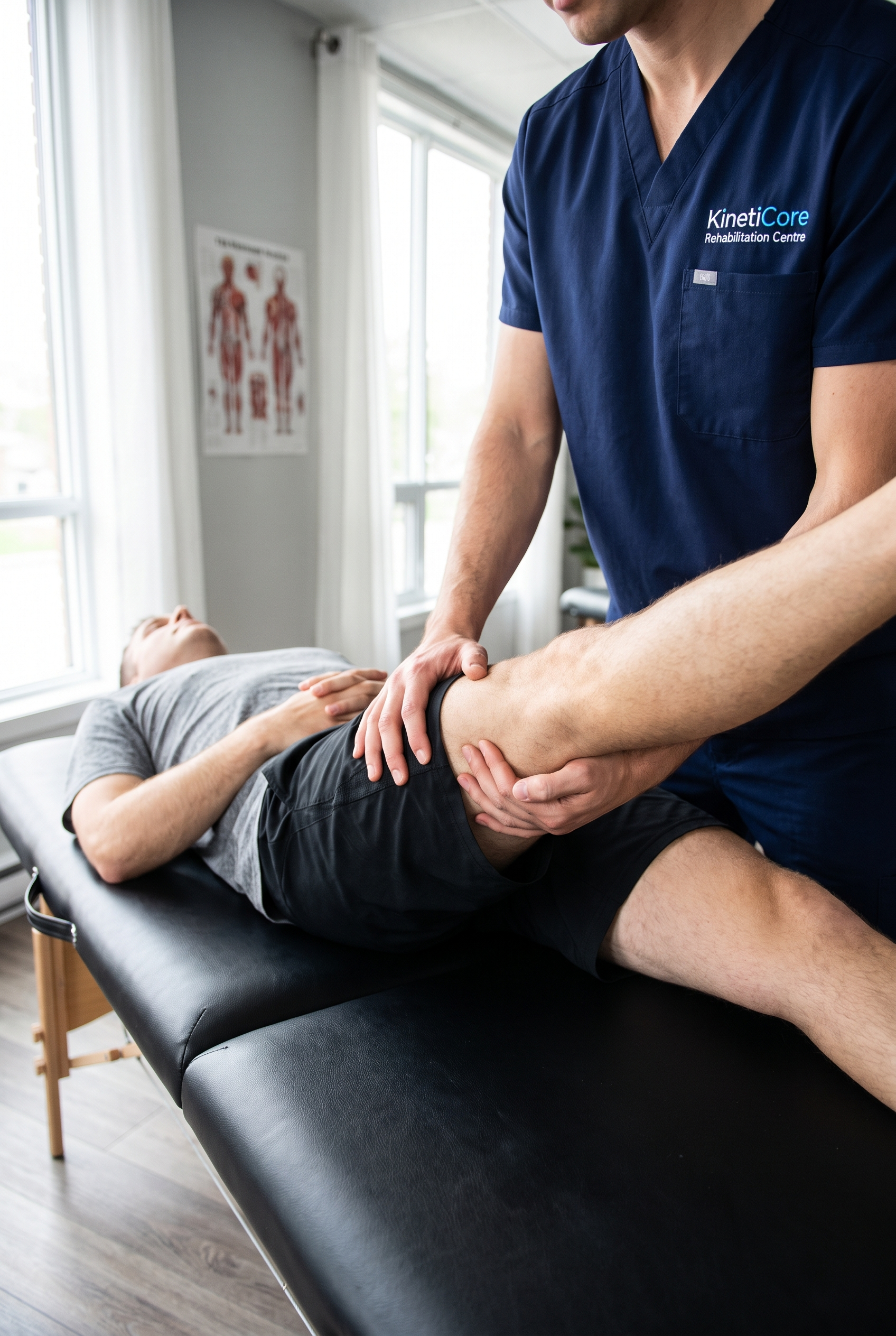
0 +
Years of Combined Experience
Who We Are
Yonge at Finch, Willowdale Park and the Route East along Highway 7
Willowdale patients travel east along Highway 7 from the Yonge Street and Finch Avenue area, continuing through Markham toward McCowan Road.
Pain around the front of the knee that appears on descending stairs, on hills and after a long spell of sitting is a load distribution problem rather than a damaged joint, and it responds well to work further up the leg. Therapeutic light can help ease the irritated tissue around the kneecap while hip and quadriceps strengthening changes how that load is shared. Hip strength is measured on both sides. Condo and office stairs are factored in. Progress is reviewed against the count.
- Multidisciplinary Team
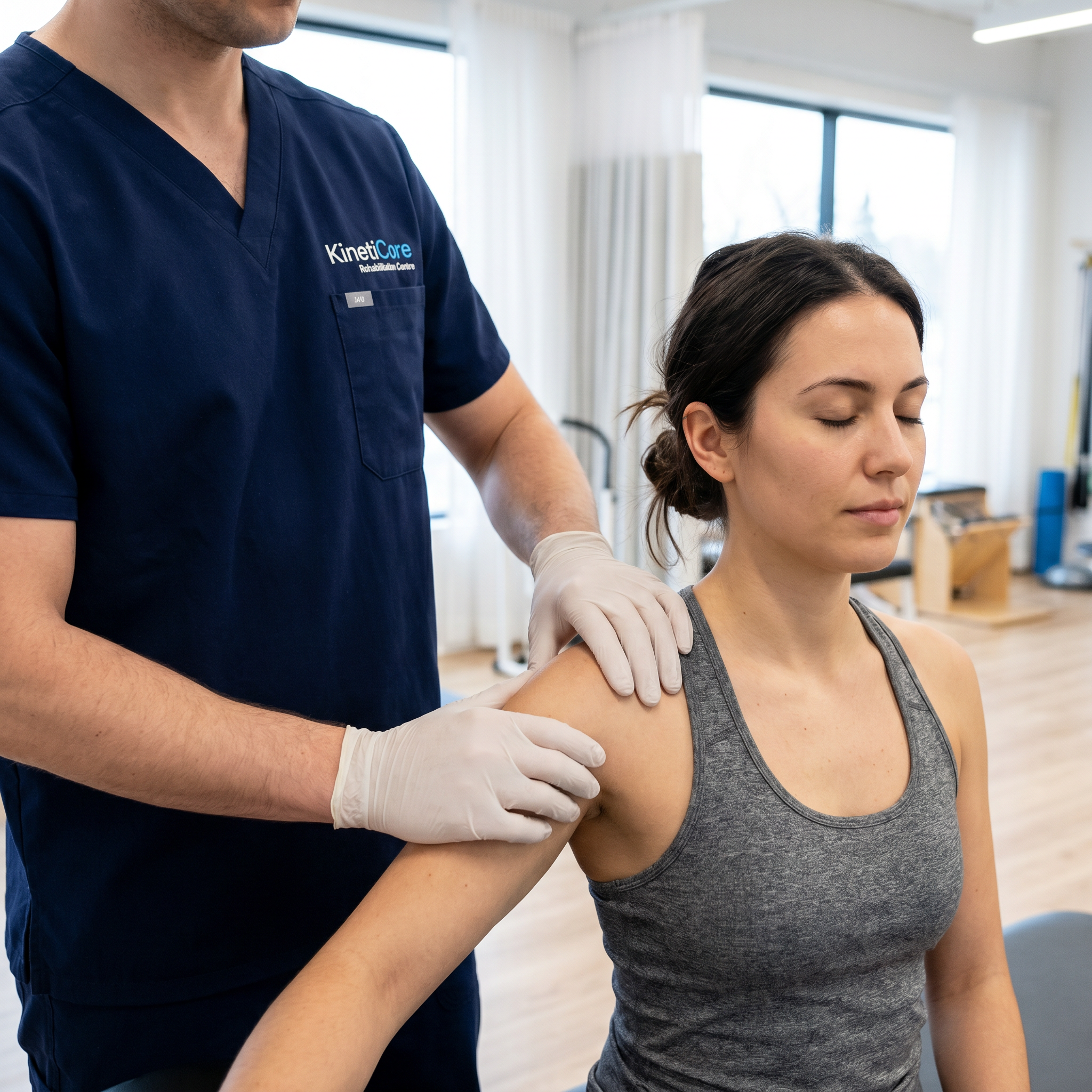
Chiropractors, physiotherapists, and registered massage therapists collaborating under one roof, so your care is coordinated, not fragmented.
- Movement Based Approach
We assess how your body actually moves, then build a treatment plan that restores function from the foundation up. Kinetic. Core. Foundation.
“Stairs down hurting more than stairs up is a specific complaint.”
Descending loads the front of the knee eccentrically and at higher force than climbing does, which is why the direction of travel matters diagnostically. Patients often mention it in passing without realising how useful the detail is. That detail shapes the assessment.
What We Offer
Laser Therapy and Knee Care for Willowdale Patients
Chiropractic Care

Hip and low back restriction alters knee loading during stair descent, and chiropractic care can address what testing finds. Both sides are assessed. Findings are explained plainly.
Physiotherapy

Quadriceps and hip strengthening carry recovery in kneecap pain, and physiotherapy supplies the graded programme and the stair targets. Both legs are measured. Targets are written down.
Registered Massage Therapy

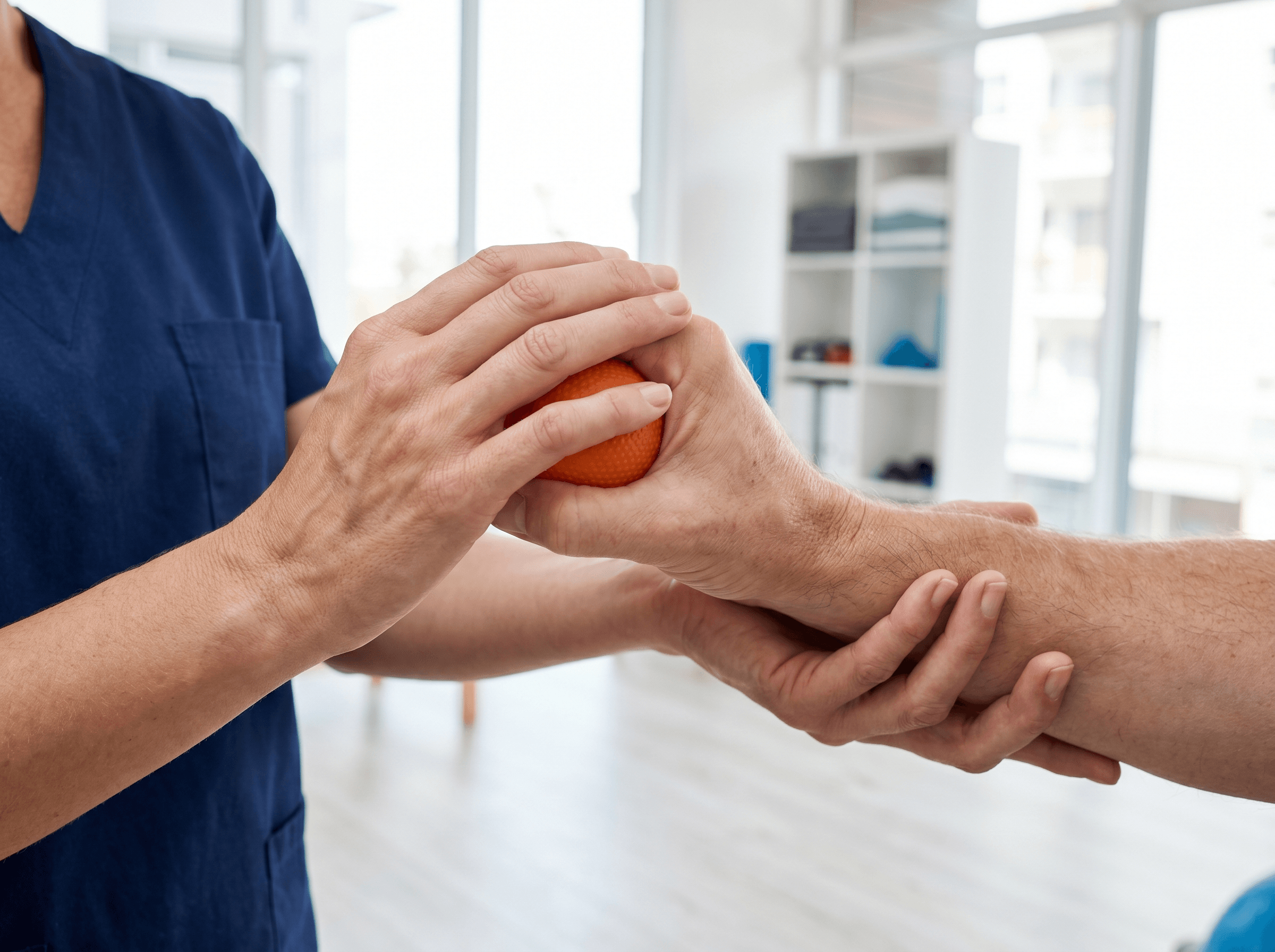
Tension through the quads and outer thigh adds to the pressure at the kneecap, and massage therapy can ease that tension. Pressure stays comfortable. Timing suits recovery days. Both legs are treated.
Acupuncture

Knee pain persisting through months of exercise sometimes eases when acupuncture is added to the plan. Points follow the assessment. Reasoning is explained first. Consent is taken each visit.
Class IV K-Laser Therapy
Applied around the kneecap, therapeutic light can help settle irritated tissue as strengthening begins. Sessions run a few minutes. Nothing invasive is involved. Stairs afterwards are fine.
Custom Orthotics

Foot position influences knee tracking on stairs, and custom orthotics assessed and cast on site can support the plan. Walking shoes are reviewed first. Casting takes one appointment.
Exercise Rehabilitation
Rebuilding stair and hill tolerance is measurable work, and exercise rehabilitation with a Registered Kinesiologist tracks it. Flights climbed are recorded. Load rises on evidence.
Pelvic Floor Therapy
Patients combining care in one trip can add pelvic floor therapy, delivered by a pelvic-health physiotherapist. A private treatment room is used. Assessment stays discreet. Consent guides each step.
Pediatric & Pregnancy Chiropractic
Families sharing the drive east often add pediatric and pregnancy chiropractic, gentle low-force care for musculoskeletal comfort. Pregnancy knee and back ache is common. Children are treated gently.
How It Works
Your Path from Pain to Lasting Movement
Every patient at KC Rehab follows the same proven four-step process, designed to uncover the root cause of your pain or restriction and build a recovery plan that actually lasts.
Step 1
Consultation and Assessment
Your first visit begins with a detailed conversation about your history, lifestyle, and goals. We then perform a hands on movement assessment to identify the underlying mechanics behind your symptoms.
Step 2
Personalized Treatment Plan
Based on your assessment findings, we build a treatment plan tailored to your specific needs, goals, and timeline. This may combine chiropractic, physiotherapy, RMT, acupuncture, and exercise rehabilitation.
Step 3
Active Treatment & Therapy
Your plan comes to life through manual therapy, targeted exercise, and the modalities best suited to your condition. Every session is monitored and adjusted based on your progress.
Step 4
Ongoing Care & Prevention
Once you have recovered, we equip you with the exercises, ergonomic advice, and maintenance schedule you need to stay pain-free and continue moving well for years to come.
Why CHoose Us
Why Willowdale Patients Combine Care in One Trip
Kneecap pain is tracked by stair tolerance rather than pain score, and Class IV laser therapy supports the hip and quad work that shifts it. Both legs are strength tested. Several professions share one visit. Parking sits outside. Direct billing applies.
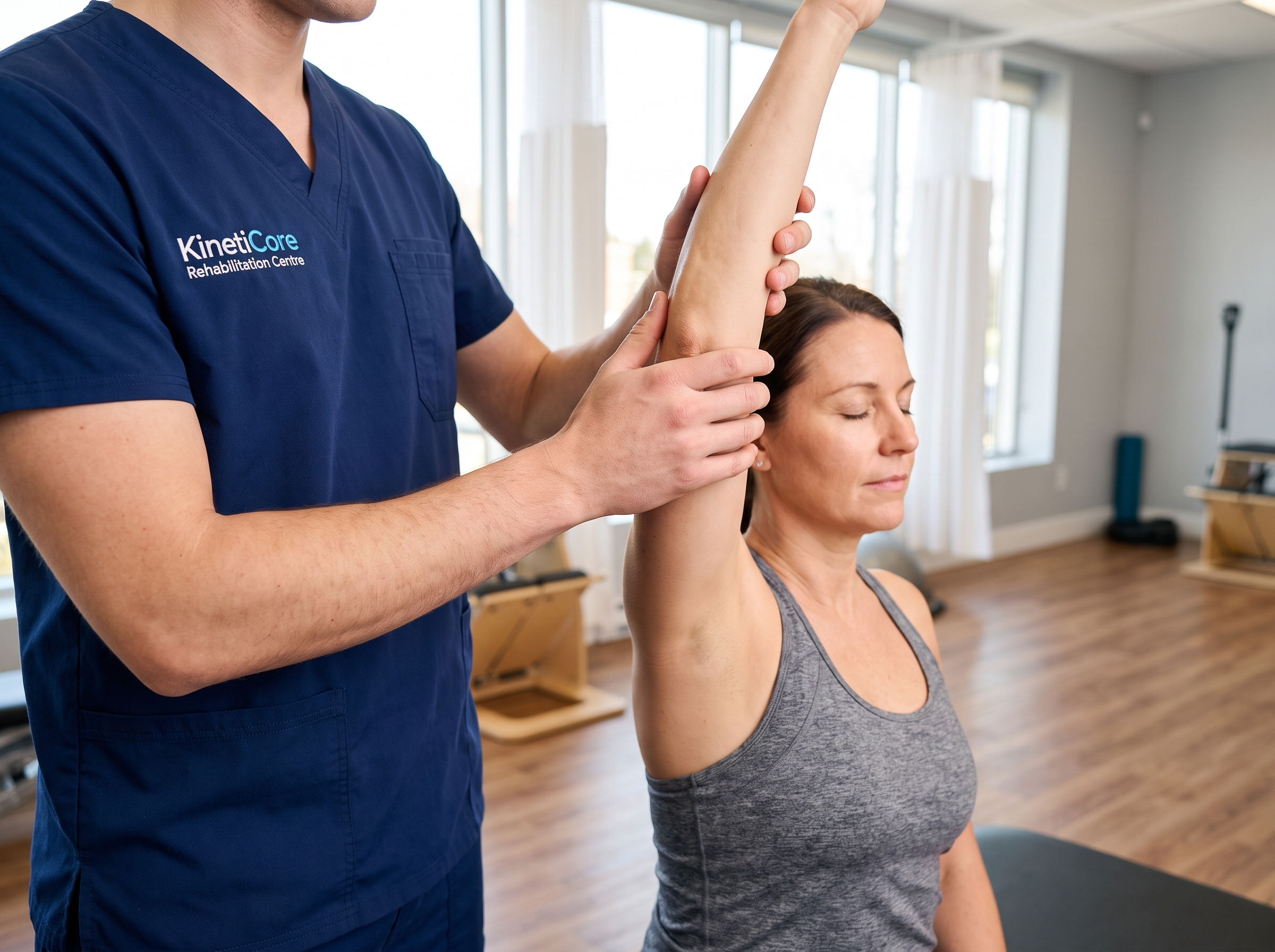
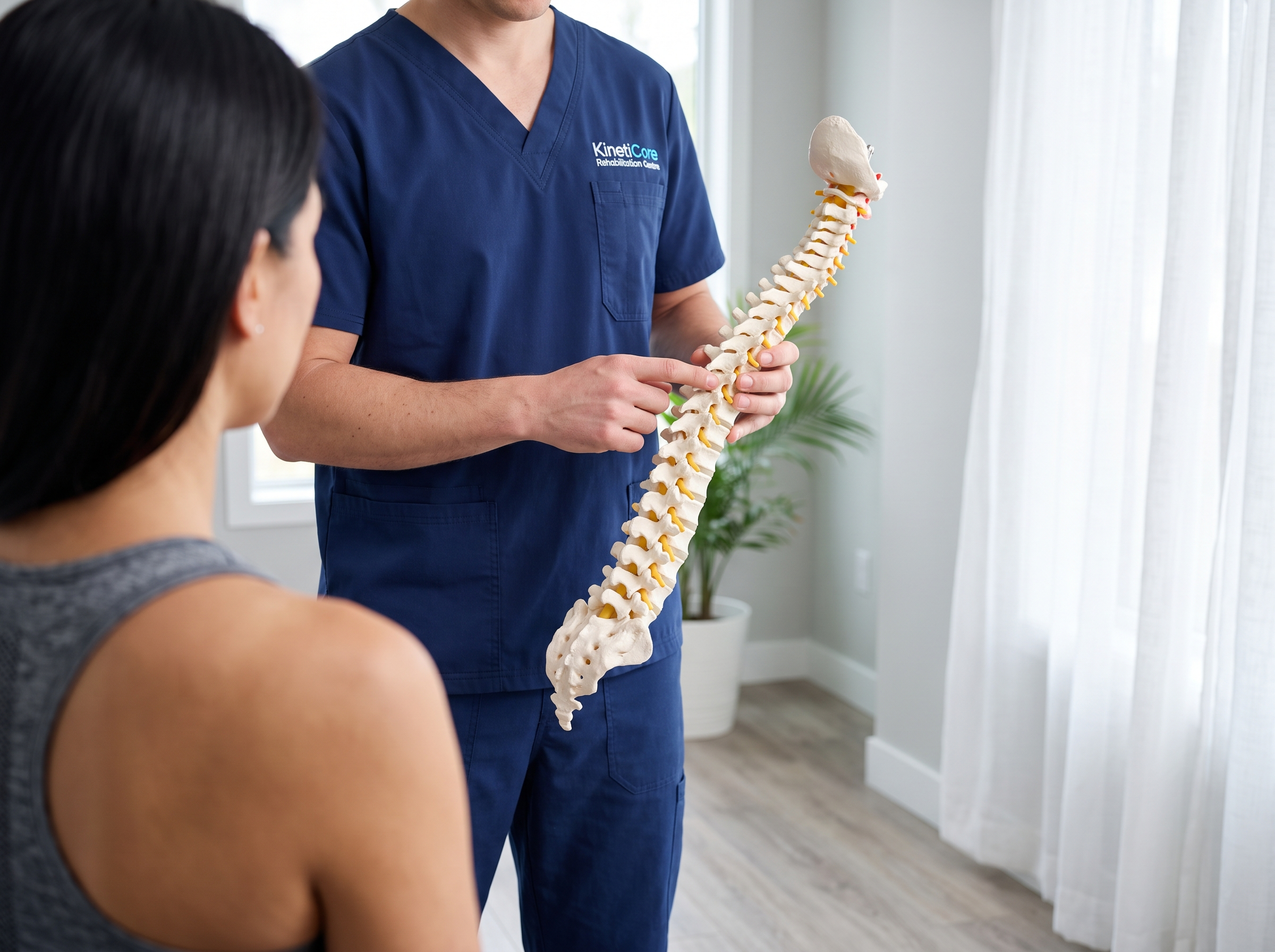
Stair tolerance recorded each visit
Flights managed before pain begins are counted rather than estimated, which turns progress into a number you can watch move. Results are shared with you.
Hip and quad strength compared
Strength is measured on both legs, since the painful side usually sits below its pair even when it feels perfectly normal to use. Testing repeats at reviews.
Condo and office stairs accounted for
Daily stair exposure at home and at work is counted into the plan, because those flights add up to far more than any exercise session.
Several professions in one visit
Manual treatment, laser and kinesiology-led loading sit under one roof, which suits patients driving east along Highway 7 from Yonge.
RESTORE. REBUILD. RECOVER.
Whether it has been a week or a decade, you do not have to keep adjusting your life around pain. Book your initial assessment at KC Rehab today and find out what real, movement based recovery actually feels like.
Our Customer Testimonials
Frequent Asked Questions
Why do stairs downward hurt more than upward?
Descending loads the quadriceps eccentrically while the kneecap is pressed hardest against the thigh bone, producing higher joint pressure.Climbing loads differently. Patients from North York report the same asymmetry. The direction is diagnostically useful. It also tracks progress well.
What is the ache after sitting through a film?
Prolonged knee bending keeps the kneecap compressed against the joint surface, producing a characteristic stiffness on standing.The pattern is well recognised. KinetiCore Rehabilitation Centre asks about it specifically because it helps separate this from other knee problems. Aisle seats really do help.
Can laser ease pain around the kneecap?
Therapeutic light can help settle irritated tissue around the joint, making the strengthening work more comfortable to begin.Strength changes the underlying problem. Patients from Don Mills combine the two in exactly the same way. Expectations are set at assessment. Response is reviewed each visit.
Does the kneecap really track badly?
Tracking language oversimplifies what is mostly a load tolerance problem, and imaging rarely shows anything that changes treatment.Strength and load management matter more. To ask what the assessment involves before booking, contact us first. Findings are explained without jargon.
Should cycling replace running for now?
Cycling with a higher saddle and lower resistance usually loads the kneecap less than running does, making it a useful interim option.Fitness is maintained meanwhile. Patients from Langstaff often switch temporarily while a flare settles. Running returns in planned stages. Saddle height is checked.
Do knee sleeves change anything?
Which hip work helps a painful kneecap?
Gluteal strengthening controls thigh position during stair descent, which reduces the load reaching the front of the knee.Quadriceps work is added alongside. The balance between the two is set from what your testing shows rather than a standard handout. Progress is retested every few weeks.
How long before stairs feel normal again?
Most people notice meaningful change within six to twelve weeks of consistent strengthening, though it varies with starting strength.Stair counts usually improve before pain disappears entirely. Progress is reviewed at set points so the programme can be adjusted. Consistency matters more than intensity.