 Skip to content

Post-surgical recovery runs across range, strength, control and confidence on different timelines. Several professions work in this building. Those strands progress together rather than in sequence. Your surgeon’s protocol frames it all.
Exercise Rehabilitation in Rouge Woods After Knee Reconstruction
Exercise rehabilitation is provided to Rouge Woods patients working toward a return to sport after knee ligament reconstruction. Both legs are compared numerically. Your surgeon’s protocol is respected. Hop testing precedes any clearance.
Direct billing accepted with most major insurance providers




Google Reviews
5.0
"I've been seeing Dr. Karavanas for 4 years. He is the best Chiropractor in Markham."
Alex Z."I can't recommend Dr. Fiona Chan enough. She spends the entire appointment with you and always diagnoses the real cause of the issue."
Alain K."Dr. Fiona Chan is knowledgeable and patient with my kids, and has been a great support for their health and gymnastics performance."
William Y.
0 +
Years of Combined Experience
Who We Are
Elgin Mills at Bayview, Silverstream and the Route South East
Rouge Woods patients travel south east from Elgin Mills and Bayview on Highway 404, then east along Highway 7 to the clinic at McCowan Road.
Reinjury rates after ligament reconstruction stay stubbornly high, and much of that traces back to returns decided by the calendar rather than by testing. A knee that looks recovered can still sit fifteen percent behind the other side, which is a gap invisible in daily life and very visible under competitive load. Strength is compared side to side. Hop distance and control are tested. Criteria are agreed at the outset. Surgical limits frame everything. Testing repeats until passed.
- Multidisciplinary Team
Chiropractors, physiotherapists, and registered massage therapists collaborating under one roof, so your care is coordinated, not fragmented.
- Movement Based Approach
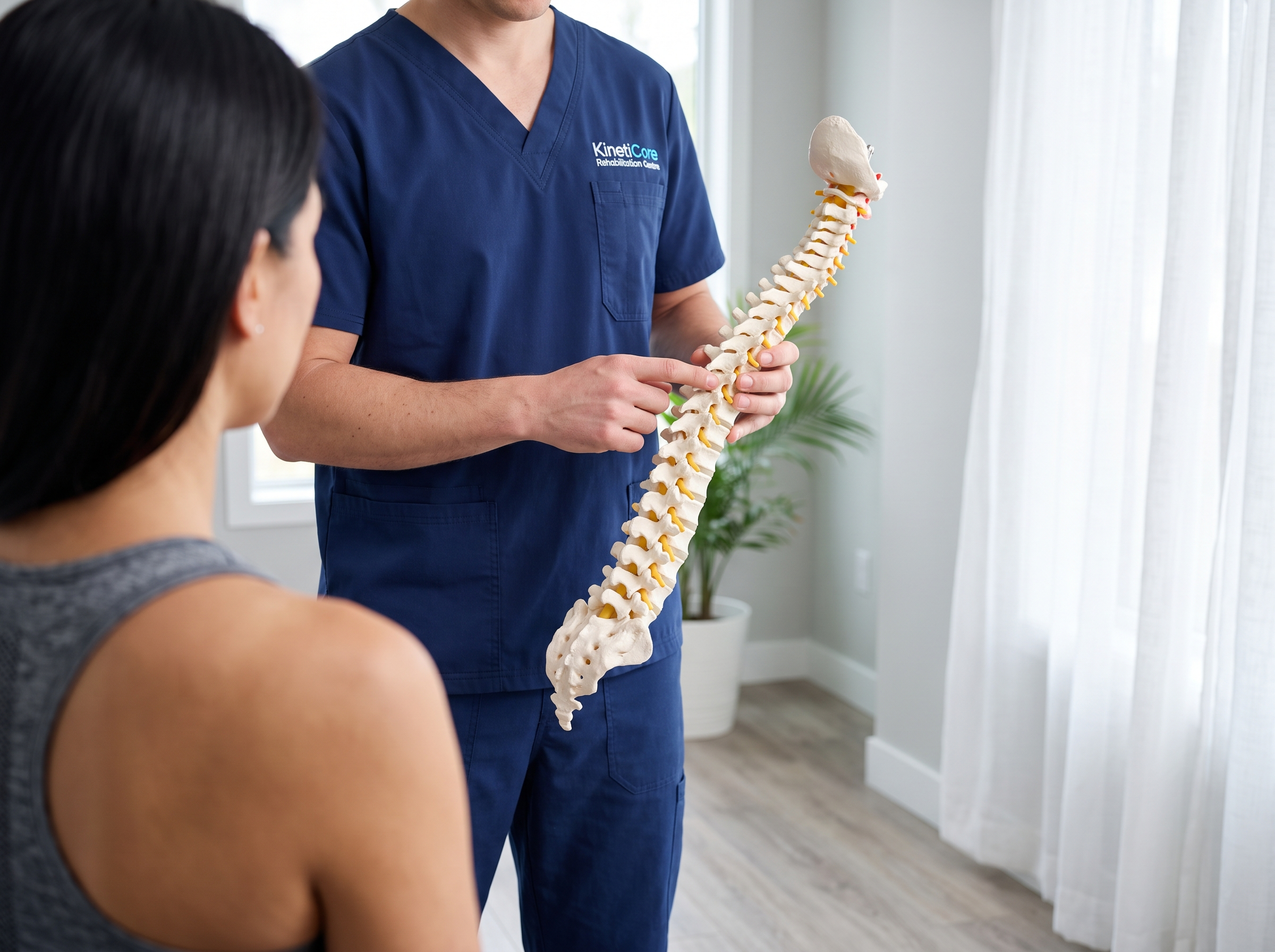
We assess how your body actually moves, then build a treatment plan that restores function from the foundation up. Kinetic. Core. Foundation.
“Nine months is a guideline. Testing is the decision.”
Time since surgery tells you what healing has probably occurred and nothing about what the leg can currently do. Two people at the same point post-operation can be months apart in readiness, which is exactly why the tests exist. Both are recorded through recovery. Clearance rests on the numbers.
What We Offer
Exercise Rehabilitation and Recovery Care in Rouge Woods
Chiropractic Care

Compensations built up on crutches persist afterwards, and chiropractic care can address the stiffness they leave elsewhere. The operated knee is respected. Both sides are assessed.
Physiotherapy

Early range and swelling management sit within physiotherapy, which runs ahead of and alongside the loading programme. Measurements are shared between us. Both plans stay coordinated.
Registered Massage Therapy

Quadriceps and hamstring tightness limits early loading, and massage therapy eases that once healing allows it. Timing follows the surgical stage. Pressure stays within your tolerance.
Acupuncture

Persistent post-operative pain limiting progress sometimes eases with acupuncture alongside the programme. The operative site is avoided. Reasoning is explained. Consent is taken each visit.
Class IV K-Laser Therapy
Residual swelling and pain can be treated with Class IV laser therapy so loading progresses on schedule. Sessions run a few minutes. Nothing invasive is involved. Training continues the same day.
Custom Orthotics

Altered loading through the other leg is common during recovery, and custom orthotics cast on site can even that out. Gait is reviewed beforehand. Casting takes one appointment. Both feet are cast.
Exercise Rehabilitation
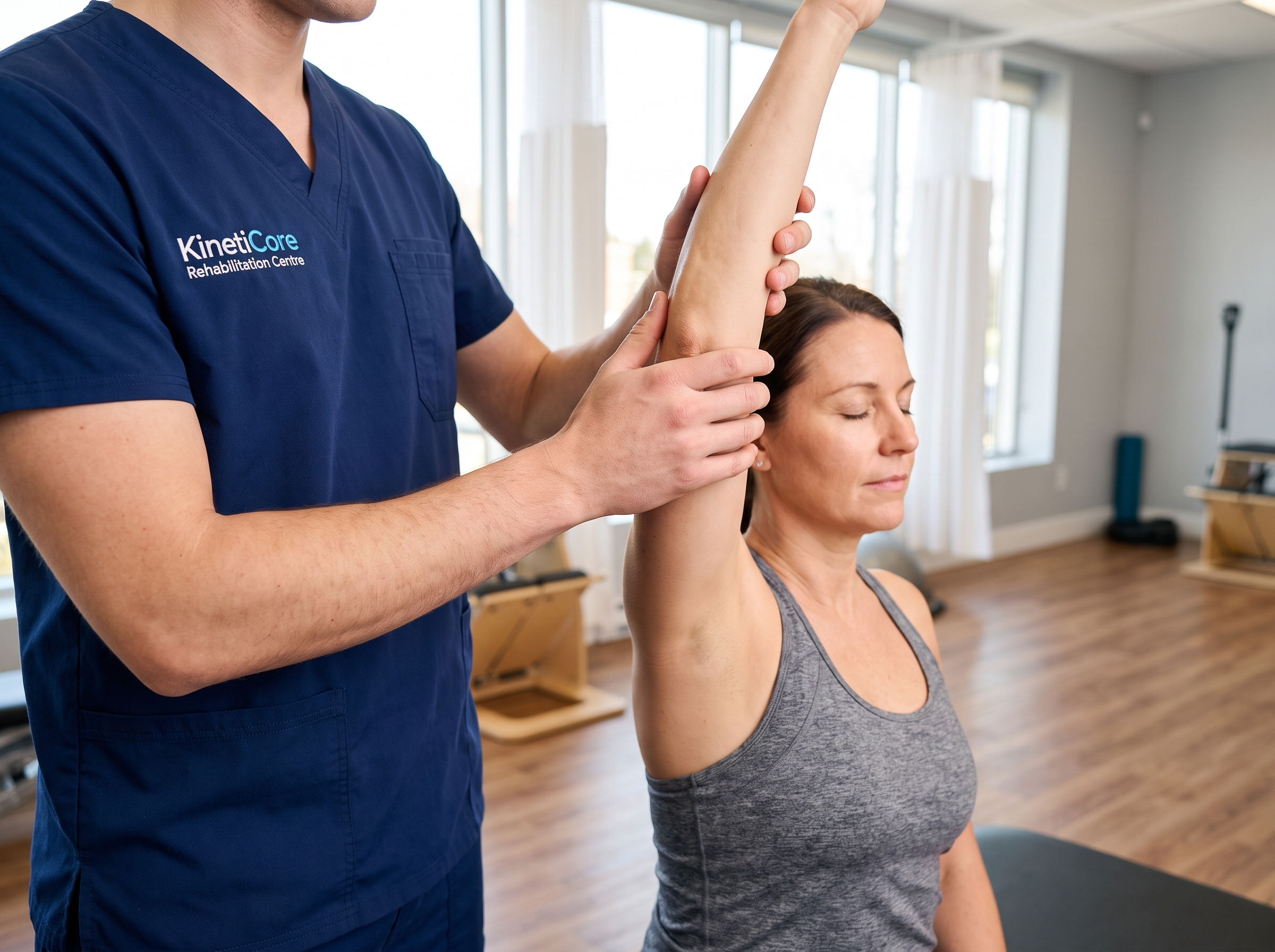
A Registered Kinesiologist with the College of Kinesiologists of Ontario runs the testing that clearance rests on. Both legs are compared. Criteria are written down. Retesting happens as needed.
Pelvic Floor Therapy
Athletes noticing symptoms as impact returns can arrange pelvic floor therapy with a pelvic-health therapist. A private treatment room is used. Assessment stays discreet. Consent guides each step.
Pediatric & Pregnancy Chiropractic
Families attending together can arrange pediatric and pregnancy chiropractic, gentle low-force care for musculoskeletal comfort. Pregnancy back ache is common. Children are treated gently.
How It Works
Your Path from Pain to Lasting Movement
Every patient at KC Rehab follows the same proven four-step process, designed to uncover the root cause of your pain or restriction and build a recovery plan that actually lasts.
Step 1
Consultation and Assessment
Your first visit begins with a detailed conversation about your history, lifestyle, and goals. We then perform a hands on movement assessment to identify the underlying mechanics behind your symptoms.
Step 2
Personalized Treatment Plan
Based on your assessment findings, we build a treatment plan tailored to your specific needs, goals, and timeline. This may combine chiropractic, physiotherapy, RMT, acupuncture, and exercise rehabilitation.
Step 3
Active Treatment & Therapy
Your plan comes to life through manual therapy, targeted exercise, and the modalities best suited to your condition. Every session is monitored and adjusted based on your progress.
Step 4
Ongoing Care & Prevention
Once you have recovered, we equip you with the exercises, ergonomic advice, and maintenance schedule you need to stay pain-free and continue moving well for years to come.
Why CHoose Us
Why Rouge Woods Patients Test Before Returning
Clearance rests on measured criteria rather than months elapsed, and exercise rehabilitation here supplies the testing those decisions need. Both legs are compared numerically. Surgical protocols are respected. Criteria are written down. Parking is free.
Return criteria written down
The thresholds required for clearance are agreed and recorded early, so the target is known months before it is reached. Nothing changes at the last minute.
Both legs compared numerically
Strength on each side is measured and the difference recorded, since a leg that feels fine often sits well behind its pair. Numbers are shared with you.
Surgeon protocol respected
Whatever restrictions your surgeon set define the ceiling for every session, regardless of how well progress appears to be going. Bring your operative details.
Hop testing before clearance
Single-leg hop distance, control and symmetry are tested before any return to competitive play is supported. Testing repeats until passed.
RESTORE. REBUILD. RECOVER.
Whether it has been a week or a decade, you do not have to keep adjusting your life around pain. Book your initial assessment at KC Rehab today and find out what real, movement based recovery actually feels like.
Our Customer Testimonials
Frequent Asked Questions
What tests decide a return to sport?
Strength symmetry, single-leg hop distance and control, and tolerance of full training are the usual thresholds.Psychological readiness matters too. Patients from Bayview Hill receive the same criteria in writing. Each is tested rather than assumed. Thresholds are agreed early.
Why is the nine month mark not enough?
Time indicates likely healing but says nothing about the strength and control the leg has recovered.Two people at nine months can be far apart. KinetiCore Rehabilitation Centre tests rather than counting weeks toward a date. Some need longer than nine months. A few are ready slightly sooner.
How much strength difference is acceptable?
Most criteria look for the operated leg within roughly ten percent of the other side across several measures.Larger gaps raise reinjury risk. Patients from Richmond Hill are shown their own figures at each retest along the way. Both legs are measured every time. Several measures are used.
What does hop testing involve?
A series of single-leg hops for distance and control, compared between legs and repeated over time.Landing quality matters as much as distance. To ask what testing involves before booking, contact us and we will explain it. Testing happens only when it is safe. Both legs are compared.
Does the surgeon set the limits?
Yes, whatever your surgeon specified defines the ceiling and nothing in the programme exceeds it.Bring your operative details and discharge notes. Patients from Gormley are asked for exactly the same paperwork at their first visit. Clarification is sought where unclear. Nothing exceeds the protocol.
Why do reinjury rates stay high?
Can training continue during the quiet middle months?
The months between early recovery and return testing are where most of the useful strength work happens.Progress feels slow because nothing dramatic changes. Consistency through that stretch is what produces a passable test later on. Sessions are spaced to suit you. Home work carries much of it.
What happens if testing is failed?
The gaps identified become the focus of the next block, and testing repeats once those have been addressed.Failing a test is information rather than a setback. Returning anyway against the numbers is the outcome carrying real risk. Timelines are adjusted openly. Gaps become the next focus.