 Skip to content
Ankle instability needs joint work, strength and balance retraining together rather than separately. All three run from this building, which keeps the drive south east from Richmond Hill down to one appointment per week during the active phase.
Physiotherapist in Richmond Hill for Recurring Ankle Sprains
We provide physiotherapy in Richmond Hill for ankles that keep rolling, treating the balance and control problem that repeated sprains leave behind rather than only the swelling. Testing guides the plan.
Direct billing accepted with most major insurance providers




Google Reviews
5.0
"I've been seeing Dr. Karavanas for 4 years. He is the best Chiropractor in Markham."
Alex Z."I can't recommend Dr. Fiona Chan enough. She spends the entire appointment with you and always diagnoses the real cause of the issue."
Alain K."Dr. Fiona Chan is knowledgeable and patient with my kids, and has been a great support for their health and gymnastics performance."
William Y.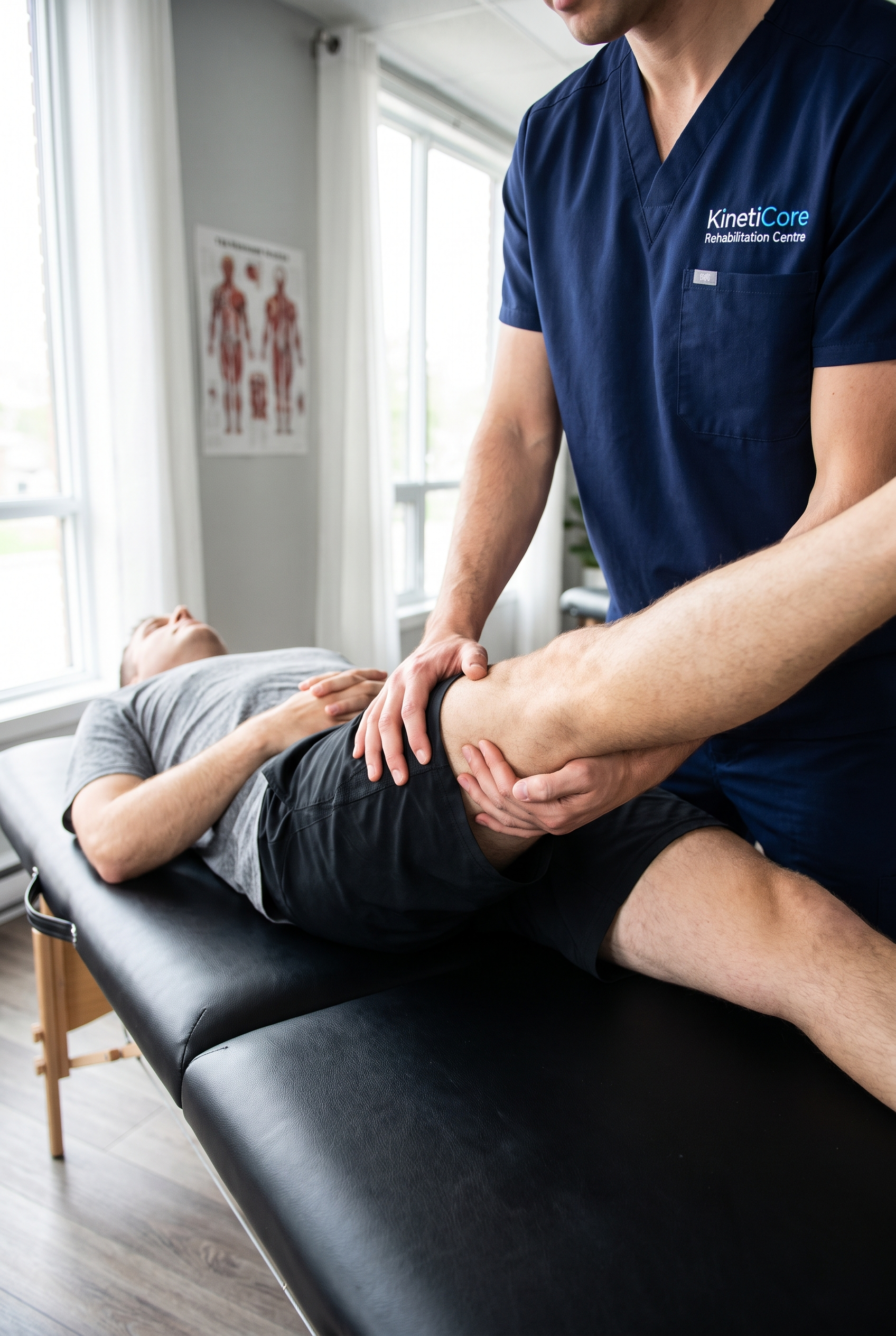
0 +
Years of Combined Experience
Who We Are
Mill Pond Park and the Route North from Highway 7
Mill Pond Park in Richmond Hill sits about twenty five minutes north west of the clinic, reached by driving west along Highway 7 and then north.
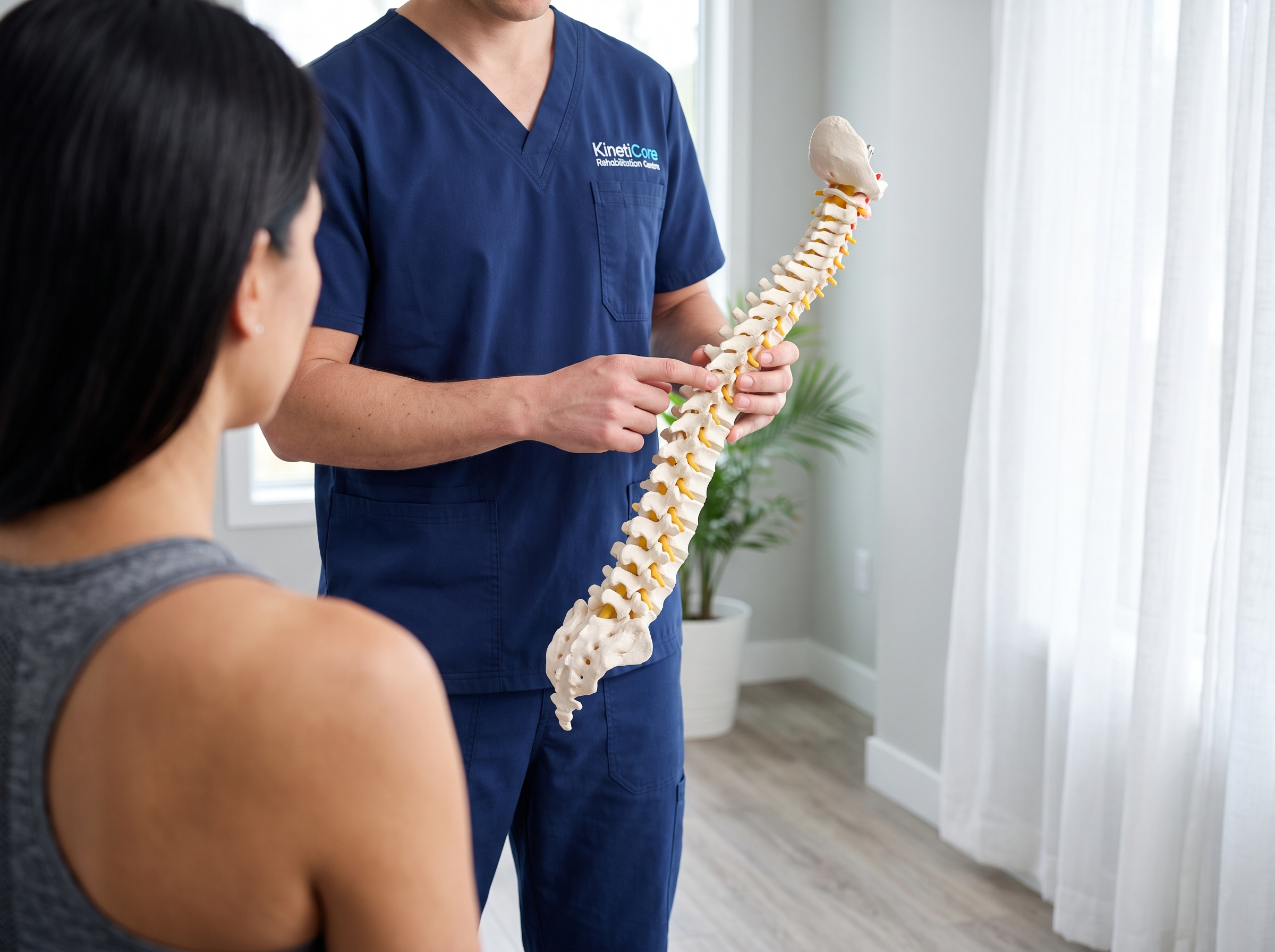
A first sprain damages ligament tissue. What makes a second one likely is what follows: position sense stays blunted, the correcting muscles fire late, and balance never fully returns. Assessment measures balance, hop control, calf strength and ankle range against the other side. Treatment restores range first, then trains control on progressively less stable surfaces until uneven ground feels reliable again. That combination is chronic ankle instability, which responds to training work.
- Multidisciplinary Team
Chiropractors, physiotherapists, and registered massage therapists collaborating under one roof, so your care is coordinated, not fragmented.
- Movement Based Approach
We assess how your body actually moves, then build a treatment plan that restores function from the foundation up. Kinetic. Core. Foundation.
“A third sprain is a signal, not a coincidence.”
Patients arriving after a third sprain usually assume their ankles are simply weak. What is really missing is the reflex correction that stops a stumble becoming a roll, and that is trainable. Six to eight weeks of proper balance work changes the recurrence rate substantially.
What We Offer
Physiotherapy Treatments for Ankle Instability
Chiropractic Care
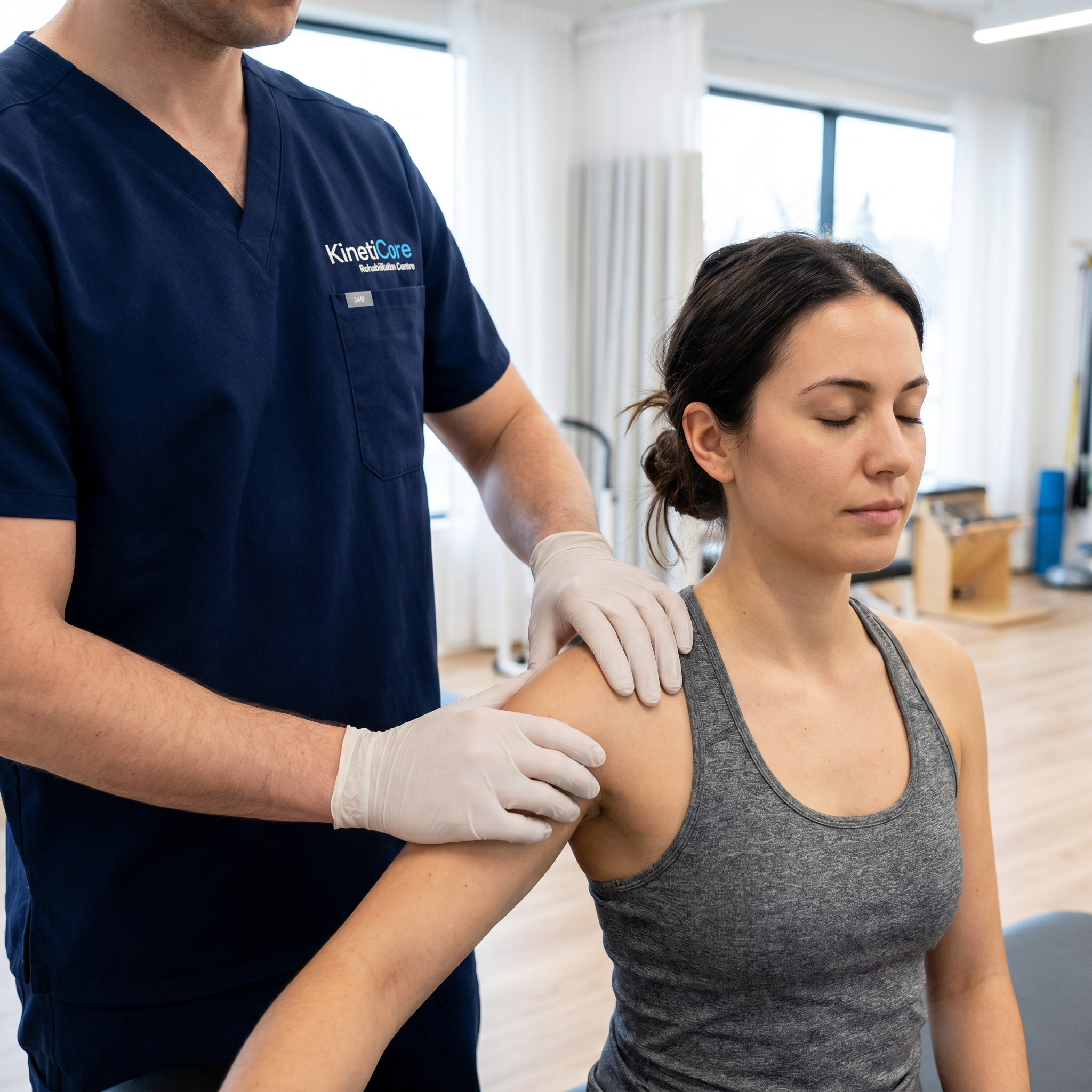
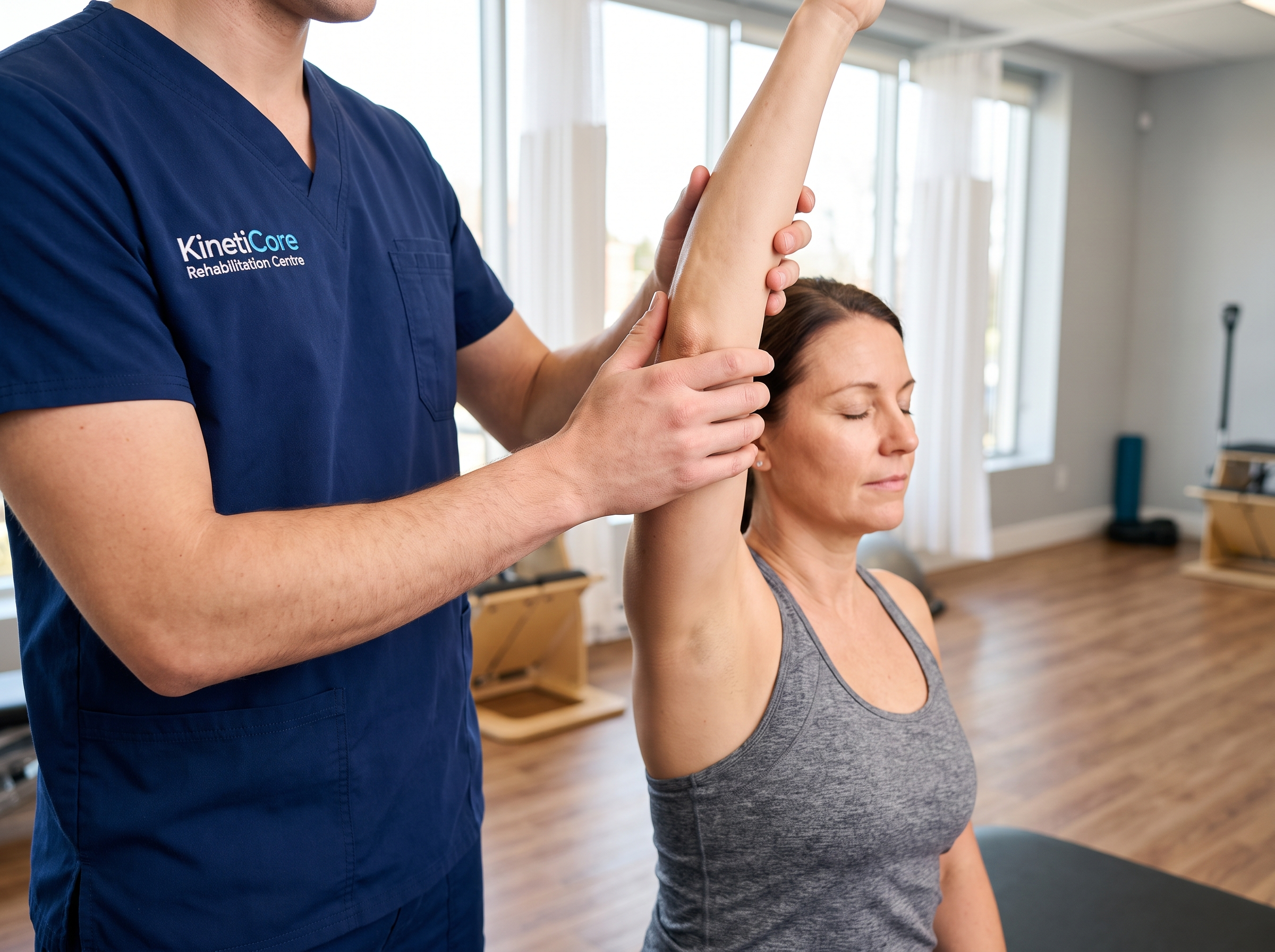
Physiotherapy restores ankle range, rebuilds calf and peroneal strength, and retrains the balance reactions that stop a stumble turning into another sprain. Both sides are measured.
Physiotherapy
Chiropractic care mobilises the ankle, foot and knee joints that stiffen after repeated sprains, and it addresses the hip and knee compensation that follows on that side afterwards.
Registered Massage Therapy

Massage therapy eases the calf and peroneal tension that builds around a guarded ankle, and it helps range work progress faster through the first fortnight. Pressure stays comfortable.
Acupuncture
Acupuncture can help ease persistent ankle pain that limits balance work, using points around the joint and along the lower leg. Sessions run half an hour and leave no lasting soreness.
Class IV K-Laser Therapy

Class IV laser therapy helps reduce swelling around a recently sprained ankle, which matters because swelling blunts the position sense the joint depends on for balance. Sessions take minutes.
Custom Orthotics
Custom orthotics change how the foot contacts the ground, and they help ankles that roll outward under load. Casting and fitting are completed here during any ordinary appointment.
Exercise Rehabilitation

Exercise rehabilitation progresses balance and landing work under supervision from a Registered Kinesiologist, adding instability and then speed as measured control improves from week to week.
Pelvic Floor Therapy

Pelvic floor therapy sits outside ankle care, though patients raising pelvic floor concerns during impact work are assessed privately, in a quiet room, with consent confirmed first.
Pediatric & Pregnancy Chiropractic

Pediatric and pregnancy chiropractic covers ankle injuries in growing athletes, where growth plate injury needs excluding before any balance or loading program begins. Parents stay in the room.
How It Works
Your Path from Pain to Lasting Movement
Every patient at KC Rehab follows the same proven four-step process, designed to uncover the root cause of your pain or restriction and build a recovery plan that actually lasts.
Step 1
Consultation and Assessment
Your first visit begins with a detailed conversation about your history, lifestyle, and goals. We then perform a hands on movement assessment to identify the underlying mechanics behind your symptoms.
Step 2
Personalized Treatment Plan
Based on your assessment findings, we build a treatment plan tailored to your specific needs, goals, and timeline. This may combine chiropractic, physiotherapy, RMT, acupuncture, and exercise rehabilitation.
Step 3
Active Treatment & Therapy
Your plan comes to life through manual therapy, targeted exercise, and the modalities best suited to your condition. Every session is monitored and adjusted based on your progress.
Step 4
Ongoing Care & Prevention
Once you have recovered, we equip you with the exercises, ergonomic advice, and maintenance schedule you need to stay pain-free and continue moving well for years to come.
Why CHoose Us
Why Richmond Hill Patients Choose This Clinic
Repeated sprains are treated as a control problem rather than bad luck. Physiotherapists here hold registration with the College of Physiotherapists of Ontario. Ankle physiotherapy runs alongside chiropractic care and supervised balance work in one building.
Balance and proprioception testing
Single leg balance with eyes open and closed, hop control and calf strength are all measured against the other side to show what is missing.
Single leg control retrained
Control is retrained under progressively less stable conditions, from firm ground to foam to unpredictable surfaces, until uneven terrain feels reliable again.
Bracing and taping advice
Bracing and taping are used during the return to sport rather than indefinitely, with the plan being to make the support unnecessary.
Return to sport criteria set
Return to sport waits until hop testing and balance measures match the other side, since that is what separates a recovered ankle from a recurring one.
RESTORE. REBUILD. RECOVER.
Whether it has been a week or a decade, you do not have to keep adjusting your life around pain. Book your initial assessment at KC Rehab today and find out what real, movement based recovery actually feels like.
Our Customer Testimonials
Frequent Asked Questions
Why does one ankle keep rolling over?
Repeated rolling reflects blunted position sense and delayed muscle reactions rather than weak ligaments alone. The reflex correction that catches a stumble arrives late. Balance training restores it over six to eight weeks. Adding Rouge Woods frees the stiff ankle and foot joints left behind.
How is chronic ankle instability assessed?
Assessment measures single leg balance with eyes open and closed, hop control, calf strength, ankle range and side to side comparison. A history of how often it rolls over matters as much. Ligament laxity is tested directly as well. Findings decide whether bracing is worth using.
Do ankle braces prevent further sprains?
Braces reduce recurrence during sport, though they work well alongside balance training rather than instead of it. Lace up and semi rigid designs both help here. Taping suits shorter periods and specific games. chiropractic care fits and reviews them as part of the return to sport plan.
How long does a moderate sprain take to heal?
A moderate sprain takes six to eight weeks to heal, while full control often takes three months to return. Walking comfortably arrives well before the ankle is ready for sport. Swelling can persist longer than pain. Patients from KinetiCore Rehabilitation Centre follow the same timeline.
Which balance exercises rebuild ankle control?
Single leg standing progressed to foam, then to hopping and unpredictable surfaces, rebuilds ankle control most effectively. Eyes closed work adds useful difficulty. Ten minutes daily beats one long weekly session by some margin. To ask what a program involves, please contact us.
Should an old sprain still hurt months later?
When is an X-ray needed after rolling an ankle?
Imaging is warranted where you cannot weight bear, where bone is tender at specific points, or where swelling is severe. Most sprains need no X-ray at all. Established clinical decision rules guide that judgement well here. Patients in Bayview Hill are screened to the same criteria.
Does taping help during a return to sport?
Taping supports a returning ankle and improves confidence, particularly in the first month back in sport. It is used alongside balance work rather than instead of it. Self taping is taught during an appointment here. Support reduces over time. Support is reduced as measured control improves.