 Skip to content
Overhead shoulder pain responds to strength work, manual care and volume management together rather than singly. Everything below sits in one building, so a trip south east from Rouge Woods covers treatment and supervised loading in one visit.
Physiotherapist in Rouge Woods for Overhead Shoulder Pain
We provide physiotherapy in Rouge Woods for shoulder pain that appears only overhead, treating the rotator cuff alongside the trunk and hip that feed a serve or a throw. Serving and throwing volume gets managed alongside the treatment itself.
Direct billing accepted with most major insurance providers




Google Reviews
5.0
"I've been seeing Dr. Karavanas for 4 years. He is the best Chiropractor in Markham."
Alex Z."I can't recommend Dr. Fiona Chan enough. She spends the entire appointment with you and always diagnoses the real cause of the issue."
Alain K."Dr. Fiona Chan is knowledgeable and patient with my kids, and has been a great support for their health and gymnastics performance."
William Y.
0 +
Years of Combined Experience

Who We Are
Rouge Woods, Elgin Mills at Bayview and the Route via Highway 404
Rouge Woods around Elgin Mills and Bayview sits about twenty minutes north west of the clinic, reached by driving south on Highway 404 and then east.
A shoulder that works fine below the horizontal and hurts above it points to the rotator cuff and the space it moves through. Pain usually follows a jump in volume rather than one incident. Assessment measures cuff strength in rotation, shoulder blade control and thoracic rotation, because a shoulder short of trunk rotation loads the cuff harder. Treatment combines cuff and blade strengthening with restoring rotation lower down. Serving volume is capped rather than stopped.
- Multidisciplinary Team
Chiropractors, physiotherapists, and registered massage therapists collaborating under one roof, so your care is coordinated, not fragmented.
- Movement Based Approach
We assess how your body actually moves, then build a treatment plan that restores function from the foundation up. Kinetic. Core. Foundation.
“The shoulder rarely fails alone. The trunk and hip feed it.”
Overhead athletes are rarely helped by being told to rest the shoulder for six weeks. The tendon needs loading, the trunk needs rotation and the schedule needs managing. Capping volume at the level that leaves the shoulder quiet the next morning keeps the season alive while the tissue catches up.
What We Offer
Physiotherapy Treatments for Rotator Cuff Complaints
Chiropractic Care
Physiotherapy strengthens the rotator cuff and shoulder blade muscles, restores thoracic rotation, and manages serving or throwing volume through the return to sport. Rotation strength is measured.
Physiotherapy

Chiropractic care mobilises the thoracic spine, ribs and neck that an overhead athlete needs rotating freely, and it addresses the shoulder blade mechanics along with them each visit.
Registered Massage Therapy

Massage therapy releases the pectoral, lat and cuff tension that accumulates across a season of overhead work, and it suits the day after a heavy training session particularly well.
Acupuncture
Acupuncture can help ease persistent cuff pain where loading has stalled, using points around the shoulder and along the arm. Needles stay in briefly and feel much like a light tap.
Class IV K-Laser Therapy
Class IV laser therapy helps calm an irritated cuff tendon quickly, which suits an athlete with a fixture next weekend and no fortnight available for resting it. Sessions take minutes.
Custom Orthotics
Custom orthotics sit outside shoulder care, though athletes carrying foot or knee complaints as well can be assessed and cast at the same appointment slot. Casting is done on site.
Exercise Rehabilitation
Exercise rehabilitation builds overhead strength and power under supervision from a Registered Kinesiologist, progressed against measured rotation strength every second week of the program.
Pelvic Floor Therapy

Pelvic floor therapy is unrelated to overhead sport, though athletes raising pelvic floor concerns during heavy lifting are assessed privately, on request, in a quiet treatment room.
Pediatric & Pregnancy Chiropractic
Pediatric and pregnancy chiropractic covers shoulder pain in young throwers, where growth plate stress in the upper arm needs excluding before a loading program begins. Throwing volume is capped.
How It Works
Your Path from Pain to Lasting Movement
Every patient at KC Rehab follows the same proven four-step process, designed to uncover the root cause of your pain or restriction and build a recovery plan that actually lasts.
Step 1
Consultation and Assessment
Your first visit begins with a detailed conversation about your history, lifestyle, and goals. We then perform a hands on movement assessment to identify the underlying mechanics behind your symptoms.
Step 2
Personalized Treatment Plan
Based on your assessment findings, we build a treatment plan tailored to your specific needs, goals, and timeline. This may combine chiropractic, physiotherapy, RMT, acupuncture, and exercise rehabilitation.
Step 3
Active Treatment & Therapy
Your plan comes to life through manual therapy, targeted exercise, and the modalities best suited to your condition. Every session is monitored and adjusted based on your progress.
Step 4
Ongoing Care & Prevention
Once you have recovered, we equip you with the exercises, ergonomic advice, and maintenance schedule you need to stay pain-free and continue moving well for years to come.
Why CHoose Us
Why Rouge Woods Players Rehabilitate Here
Cuff strength and thoracic rotation are measured, and volume is managed rather than stopped. Physiotherapists hold registration with the College of Physiotherapists of Ontario, and shoulder physiotherapy runs alongside chiropractic care and supervised loading.
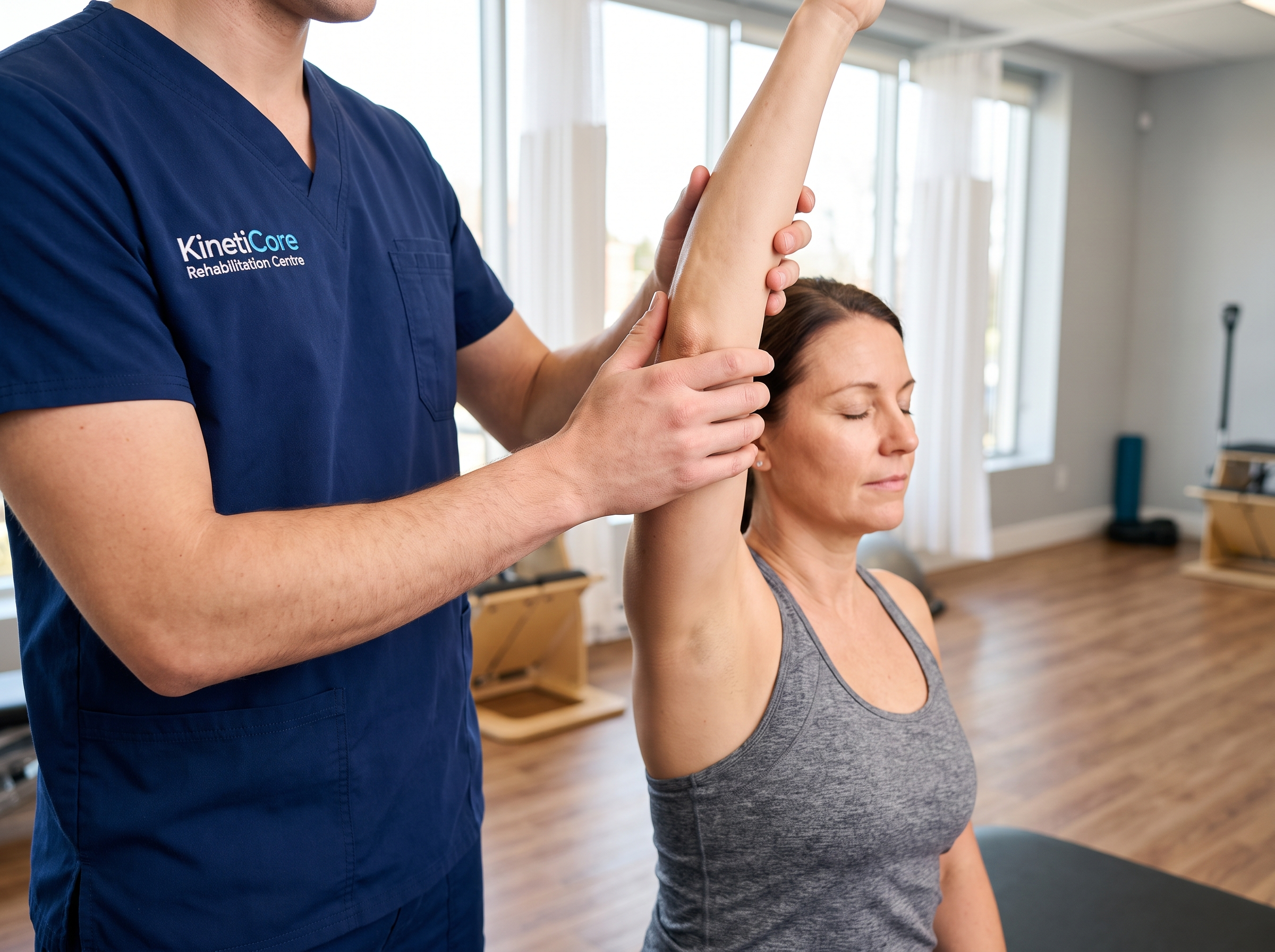
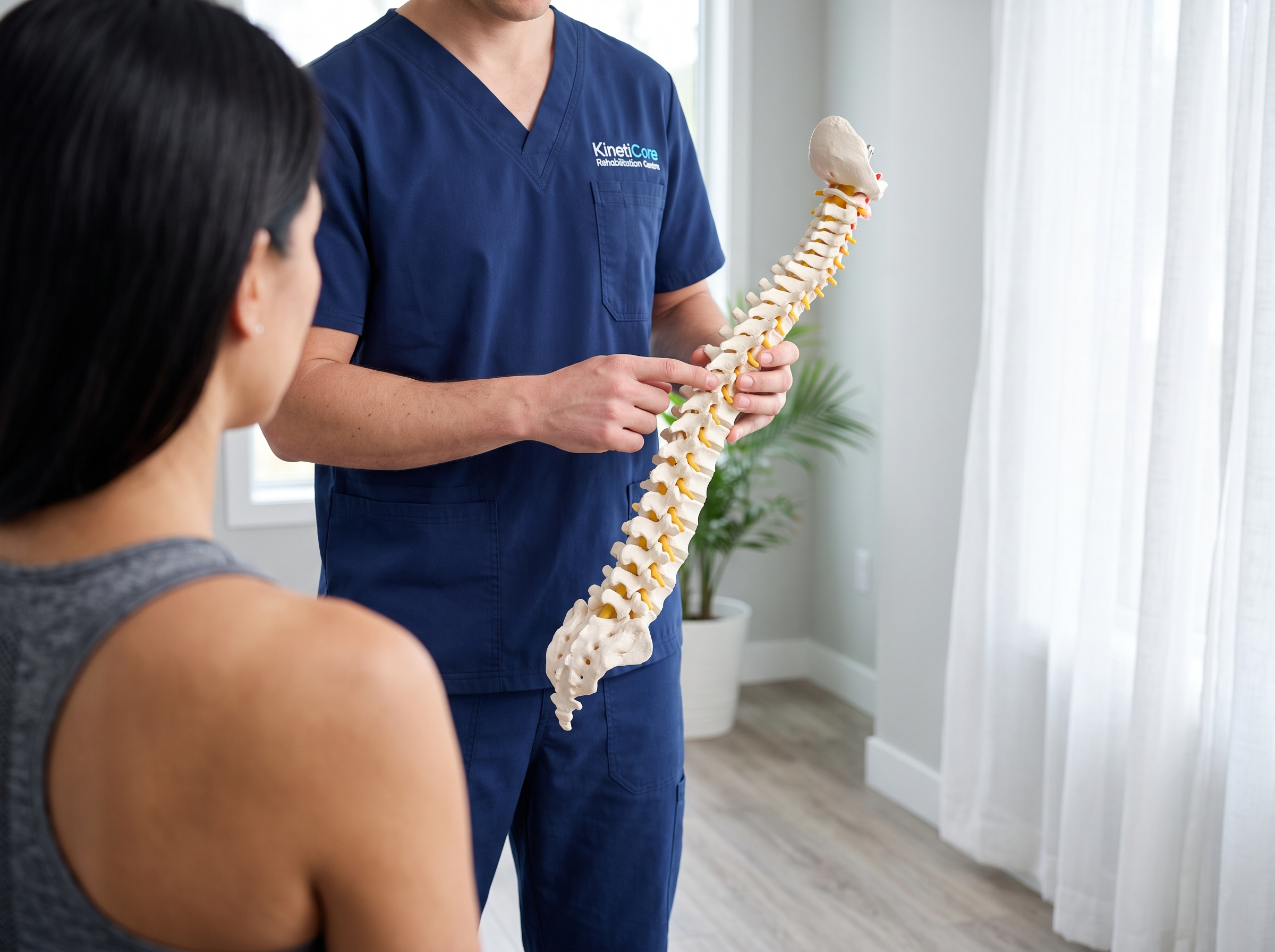
Overhead action analysed
The serve, spike or throw is analysed directly, because the fault loading the cuff usually sits in timing and trunk rotation rather than in the arm.
Rotator cuff strength measured
Rotation strength is measured in both directions and compared with the other side, giving numbers that decide when volume can climb again.
Serving and throwing volume managed
Weekly serving or throwing volume is capped at the level that leaves the shoulder quiet the next morning, then increased deliberately.
Trunk and hip contribution assessed
Thoracic rotation and hip mobility are assessed, since a shoulder short of movement below it compensates by loading the cuff considerably harder.
RESTORE. REBUILD. RECOVER.
Whether it has been a week or a decade, you do not have to keep adjusting your life around pain. Book your initial assessment at KC Rehab today and find out what real, movement based recovery actually feels like.
Our Customer Testimonials
Frequent Asked Questions
Why does the shoulder only hurt overhead?
Overhead positions compress and load the rotator cuff tendons most, so an irritated tendon hurts there and nowhere else. Below the horizontal the cuff works far less hard. Weakness in rotation usually accompanies it. chiropractic care assesses the thoracic and neck contribution at the same visit.
What is rotator cuff tendinopathy?
Rotator cuff tendinopathy is irritation and structural change in the tendons that control shoulder rotation, driven by load. It develops gradually rather than suddenly, across a whole season of play. Strength loss in rotation is typical. Imaging findings often do not match symptoms.
How is serving volume managed during treatment?
Serving volume is capped at the level that leaves the shoulder quiet the following morning, then raised weekly. Complete rest tends to leave the tendon less tolerant. Session frequency matters more than session length. Adding KinetiCore Rehabilitation Centre keeps thoracic rotation available for the action.
Which exercises strengthen the rotator cuff?
External rotation work, shoulder blade strengthening and progressive overhead loading together form the core of the program. Bands suit the early stages and weights suit the later ones. Sets stay short and are performed frequently. Athletes from contact us follow the same progressions.
Does shoulder blade control affect the cuff?
Shoulder blade control decides how much space and support the cuff has, so poor control raises cuff load directly. Blade positioning is retrained from the first week onwards. Progress is then checked at every single visit. To ask about a shoulder assessment, please Richmond Hill.
Can throwing continue while the shoulder settles?
When is a cuff tear suspected rather than tendinopathy?
A tear is suspected where strength loss is marked, where the weakness came on suddenly, or where night pain dominates the picture. Age and any history of trauma both matter here. Imaging is arranged promptly in each of those cases. Athletes in Gormley are screened the same way.
How long before overhead sport feels normal again?
Most overhead athletes feel normal within eight to twelve weeks, with strength returning before full confidence does. Long standing cases take rather longer than that. Continued maintenance work through the season prevents recurrence. Progress is judged on measured rotation strength.